
Michael is an Executive Director & Tennis Player
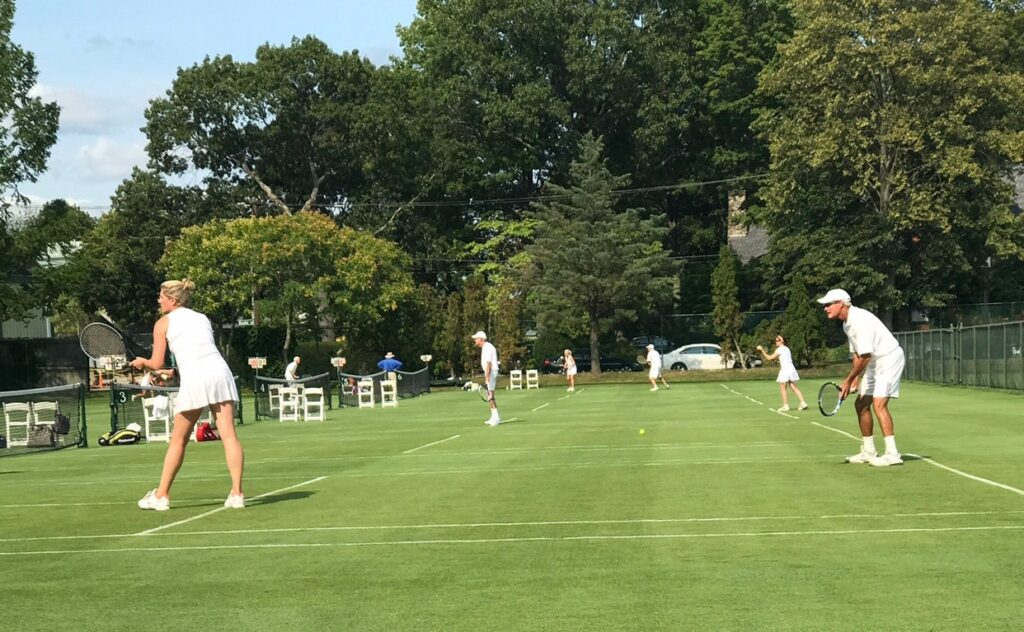
Michael Horwitz shares his passion for tennis, especially playing on grass courts at the historic Longwood Cricket Club in Chestnut Hill, Massachusetts. He talks about how tennis has become a big part of his family's life, with everyone—from his wife and children to in-laws—getting involved in the sport. Michael describes the unique feel and challenges of playing on grass compared to hard or clay courts, and reveals how he hopes to one day participate in Longwood's prestigious 90-and-over tournament. He recounts memorable moments, including playing in a national father-daughter tournament and traveling to famous events like Wimbledon and the French Open. Michael emphasizes the welcoming nature of his club, where tennis is the focus and professional backgrounds take a back seat. He also reflects on how sharing personal passions, like tennis, helps build genuine connections both at work and in life.
Episode Highlights
· Michael emphasized how tennis became a big part of his adult life and family, providing opportunities to play and connect across generations.
· At his tennis club, everyone is welcomed regardless of skill level, and the shared love of tennis creates genuine connections.
· He discussed the value of sharing personal interests like tennis with colleagues, noting plans to further encourage his team to share their “Ands” and learn more about each other’s lives beyond work.
· Michael reflected on the need to feel comfortable sharing personal passions, mentioning that fulfillment comes from work and hobbies alike, and it’s okay for interests to be seasonal, as with outdoor grass tennis.
Meredith's Photos

Michael's Links
Help Make Work Better
I need your help for 2 minutes to complete this important survey on work culture. Your anonymous responses will provide key insights to develop a new program for more positive and engaged teams.
Subscribe Now
 Apple Podcasts
 Spotify
 Podchaser
 Stitcher
 Overcast
 PocketCasts
 Acast
Acast iHeartRadio
 SoundCloud
Podcast Transcript
John Garrett [00:00:00]:
Hey, this is John Garrett. I’m passionate about making work more human, especially in this age of AI. I don’t just host this podcast. I also help organizations put people first. Through my keynote speaking, coaching and What’s Your “And”? implementation programs. To learn more or to connect with me on LinkedIn or Instagram, I invite you to join the movement at www.whatsyourand.com. Now let’s jump into this week’s conversation.
Michael Horwitz [00:00:27]:
Hey there. This is Michael Horwitz. When I’m not playing tennis on grass, I’m listening to John Garrett on What’s Your “And”?.
John Garrett [00:00:34]:
Welcome to episode 703 of What’s Your “And”?! This is John Garrett and each Wednesday I interview a professional who, just like me, is known for a hobby or a passion or an interest outside of work. And to put it another way, it’s encouraging people to find their and those things above and beyond your technical skills, the things that actually differentiate you when you’re at work. It’s the answer to the question of who else are you beyond the job title. And if you like what the show is about, be sure to check out the award-winning book. It’s on Amazon, Indigo, Barnes and Noble Bookshop, a few other websites. All the links are at www.whatsyourand.com the book goes more in depth with the research behind why these outside-of-work passions are so crucial to your corporate culture.
John Garrett [00:01:17]:
I can’t say how much it means that everyone’s reading it and writing such great reviews on Amazon. Thank you so much for those. It’s silly how much that matters and more importantly, changing the cultures where they work because of it. And if you want me to read it to you, that’s right, this voice, reading the book, look for what’s yous and on audible or wherever you get your audio books. And please don’t forget to subscribe to the podcast so you don’t miss any of the future episodes. I love sharing such interesting stories each and every week and this week is no different with my guest, Michael Horwitz. He’s the Executive Director of BDO Alliance USA and now he’s with me here today. Michael, thanks so much for taking time to be with me on What’s Your “And”?.
Michael Horwitz [00:01:53]:
So great to be with you, John. Thank you.
John Garrett [00:01:55]:
This is awesome. I mean we met 7ish years ago.
Michael Horwitz [00:01:58]:
I remember hearing about these podcasts a long time ago and I remember thinking to myself, when is he going to get to 702 so I can pop in and maybe I could hit that big number exactly.
John Garrett [00:02:11]:
I did all these practice rounds just to get to you. So here it is. This is it. This is center court. So I have rapid-fire questions. Get to know Michael on a new level here. Do you have a favorite color?
Michael Horwitz [00:02:23]:
I would say my favorite color today is purple.
John Garrett [00:02:26]:
Okay. All right. How about a least favorite color?
Michael Horwitz [00:02:29]:
Maybe red?
John Garrett [00:02:30]:
Red, yeah. Yeah, Same on that. Yeah, yeah, for sure. Are you more early bird or night owl?
Michael Horwitz [00:02:35]:
Totally early.
John Garrett [00:02:36]:
How about a least favorite vegetable?
Michael Horwitz [00:02:38]:
Cauliflower.
John Garrett [00:02:39]:
Oh, good answer. I mean, like, you have to put like cheese or something like, I don’t know, like cauliflower always needs something, doesn’t wow me. Yeah, yeah, totally. How about puzzles? Sudoku, crossword, maybe a jigsaw puzzle?
Michael Horwitz [00:02:52]:
All the three. I love doing them. I love doing puzzles. Crossword puzzles especially.
John Garrett [00:02:57]:
How about a favorite actor or an actress?
Michael Horwitz [00:03:00]:
I’m gonna pass on that. There are just too many great actors and actresses.
John Garrett [00:03:04]:
Oh, yeah. Well. And they’re all listening to the show, so you don’t want to make any of them angry.
Michael Horwitz [00:03:09]:
I was gonna say Diane Keaton because she just passed away, but she’s definitely not listening, Right? Maybe she is. She probably is, actually.
John Garrett [00:03:17]:
Maybe on a different dimension.
Michael Horwitz [00:03:19]:
She’s big on your podcast, actually.
John Garrett [00:03:22]:
How about toilet paper roll? You go over or under?
Michael Horwitz [00:03:24]:
Totally over.
John Garrett [00:03:26]:
Are you changing it when you get to somewhere else?
Michael Horwitz [00:03:29]:
Okay.
John Garrett [00:03:31]:
Love it. That’s awesome.
Michael Horwitz [00:03:32]:
Hey, how many people have you asked that question to that have not responded with any kind of direction?
John Garrett [00:03:40]:
Everyone’s got an opinion. Well, no, some people are like within arm’s reach, you know, as long as I can get it. There’s a handful of.
Michael Horwitz [00:03:47]:
Are you an under guy or you an over guy?
John Garrett [00:03:49]:
I’m an over guy for sure. The under people will then justify it with, well, I have cats or I have a toddler or whatever. There’s always a reason. So they feel guilty. They don’t own the under. Yeah, they don’t own it. It’s always a. Well there.
John Garrett [00:04:04]:
But there’s a reason, like, so they know. Percentage was 98, 99% over.
Michael Horwitz [00:04:10]:
Wow.
John Garrett [00:04:10]:
Easy. Yeah. And then. And then there’s about half of them are the. I will change it if it’s not over.
Michael Horwitz [00:04:18]:
Also, I think it is rude if you’re going into someone’s private bathroom to change it up. That would be a bit much, even for me. Right?
John Garrett [00:04:27]:
Yeah. Well, I mean, there are people that will. I’ve never done that. No, but there are people that have been on that have made it very.
Michael Horwitz [00:04:34]:
Clear that goes beyond what is appropriate behavior in my world.
John Garrett [00:04:37]:
Right. Well, or maybe your friend just doesn’t care and doesn’t notice. You know, there’s that too. So they just didn’t know and. Or there’s a lot of. I used to be an under guy, and then when I got married and my wife explained to me that this is wrong, so there’s been a lot of conversions as well.
Michael Horwitz [00:04:52]:
It’s so funny because I’ve been married for 36 years now. I think my wife. We’ve never discussed this. I don’t think she has a preference.
John Garrett [00:05:02]:
Yeah, right.
Michael Horwitz [00:05:02]:
I’m going to ask her when I. When I go home today, I’m going to ask her and see what she says. This is.
John Garrett [00:05:07]:
Yeah, she’s going to ask you what’s wrong with you? Like, why are you asking me this? And then now it’s going to come back to me. There it is. All right, this one people do have a strong Star wars or Star Trek?
Michael Horwitz [00:05:18]:
Star Wars. Yeah.
John Garrett [00:05:20]:
Yeah. I’m the same on that. Your computer, PC or Mac?
Michael Horwitz [00:05:22]:
PC.
John Garrett [00:05:23]:
How about ice cream? I love ice cream. You go in a cup or in a cone?
Michael Horwitz [00:05:27]:
Always. Cup, always.
John Garrett [00:05:29]:
There you go. Yeah. I think you get a little extra.
Michael Horwitz [00:05:31]:
Take my time.
John Garrett [00:05:33]:
Yeah.
Michael Horwitz [00:05:34]:
Don’t want that melting on my. On my hand. Right.
John Garrett [00:05:36]:
All down your arms and.
Michael Horwitz [00:05:37]:
Yeah, yeah.
John Garrett [00:05:38]:
How about a favorite animal? Any animal at all.
Michael Horwitz [00:05:41]:
Gotta say dog. I know it’s too generic, but it’s.
John Garrett [00:05:45]:
Yeah, yeah, absolutely. How about a more talk or text tax these days?
Michael Horwitz [00:05:50]:
Yeah, okay.
John Garrett [00:05:52]:
All right. When you were a kid, favorite activity in gym class?
Michael Horwitz [00:05:55]:
Dodgeball.
John Garrett [00:05:56]:
Nice.
Michael Horwitz [00:05:58]:
Yes.
John Garrett [00:05:59]:
Right?
Michael Horwitz [00:05:59]:
That was fun.
John Garrett [00:06:00]:
That was always a good day. Always like it was. Yeah. Yeah. That’s fun. That’s awesome. I wish there was adult dodges for adults.
Michael Horwitz [00:06:09]:
Yeah, for sure. You can find it even in Colorado. I’ll bet they have it.
John Garrett [00:06:12]:
Oh, actually, that’s probably where they founded it because they do crazy stuff out here. Do you have a favorite number?
Michael Horwitz [00:06:18]:
Yes, I do. But if I give it away, everyone will know my password to everything, so.
John Garrett [00:06:22]:
Okay, all right, fair enough. Fair enough. How about favorite season? Summer, winter, spring or fall?
Michael Horwitz [00:06:27]:
I love the fall. It’s so beautiful. I live in New England. It’s just a great time of the year.
John Garrett [00:06:32]:
Yeah, absolutely. How about that? You have the accounting background, balance sheet or income statement.
Michael Horwitz [00:06:37]:
So my background, education wise and originally professionally, is not in the accounting world.
John Garrett [00:06:42]:
Oh, okay.
Michael Horwitz [00:06:43]:
I hang around accounting firms for quite some time. And I would say income statement for sure.
John Garrett [00:06:49]:
Yeah, yeah. And the favorite thing you have or the favorite thing? You own my family. Solid answer. Of course. So let’s talk tennis. How did this get started? Did you grow up playing tennis or.
Michael Horwitz [00:07:01]:
I wish that I had grown up playing tennis. I did not. But mostly as an adult, got into playing tennis and you know, it’s become a big part of my life, my family’s life. It’s just a great sport that you can play forever. And I’m very jealous of folks that had the privilege of starting to play tennis when they were young because they just have beautiful natural tennis strokes that you can tell versus someone who hadn’t had that privilege and sort of grew up and maybe started playing later in their lives. Do you play tennis?
John Garrett [00:07:37]:
Yeah, I did when I was younger some and then I haven’t lately though. I mean, by lately I probably mean 15 years. Yeah. Because I mean, you have to have the racket, which isn’t hard to get, but then you also have to have somebody to all hit it back, you.
Michael Horwitz [00:07:51]:
Know, unless you want to go off of a backboard, which you could do. You could do it yourself.
John Garrett [00:07:54]:
You could play off the wall. Absolutely. But I haven’t in a long time, to be honest. But it is. It’s a lot harder than I think people think, or I guess it can be to whatever level you want it to be. But I mean, there’s short sprints all over the place.
Michael Horwitz [00:08:10]:
It’s great exercise. So I play now quite a bit and got my family into it. We live outside of Boston in Chestnut Hill, Massachusetts, and we’re literally a two minute walk from the second oldest tennis club in the country and it’s called Longwood. So it’s got a lot of history, but most Importantly, it has 25 beautiful grass tennis courts.
John Garrett [00:08:41]:
Wow. Okay.
Michael Horwitz [00:08:43]:
Clay courts. So there are 44 tennis courts and this is a very simple club. You play tennis there, you can swim there, there’s, you know, a snack bar. It’s not fancy at all. It’s all about tennis. And the clay is nice. Lots of clay courts all over the world and all over the place. But what makes it so special is the grass.
John Garrett [00:09:04]:
I’ve never played or walked on a grass court. Is it like a putting green? Sort of.
Michael Horwitz [00:09:10]:
The grass is much higher than a putting green. But if you can imagine, you know, you got a tennis ball going off of it, so it can’t be too high because the ball would stop. Right. So it’s somewhere between a putting green and what your lawn looks like.
John Garrett [00:09:24]:
Okay. Okay.
Michael Horwitz [00:09:25]:
It’s very fast surface, so the ball sort of skids off of it. And there’s a premium to playing like a Serve and volley game where you’re minimizing the number of times that the ball bounces. That could maybe be an erratic bounce. So it’s a fun game. It takes a different skill set to play grass tennis than traditional hard courts or clay courts. And it’s beautiful.
John Garrett [00:09:48]:
And that’s. I mean, on TV people would know that Wimbledon being the grass that is, you know, everybody knows of exactly.
Michael Horwitz [00:09:55]:
There’s actually a couple kinds of grass, believe it or not. So the Wimbledon grass is a rye grass, which is most tennis courts, or rye grass. And the ball bounces a little bit higher even though it’s lower bounce. The quartz of Longwood are this Poa potensis type of grass. And so it’s maybe a softer grass, a little bit harder to maintain, but gives you much more flexibility in terms of your joints. So people go out and play tennis barefoot on the grass. You obviously play. Can play with tennis sneakers, but it’s.
Michael Horwitz [00:10:32]:
It’s a different feel even than the majority of the grass courts that people might play on all around the world.
John Garrett [00:10:38]:
That’s fascinating. I had no clue. I had no clue. I just figured they’d all be the same kind of grass or whatever grows in that area or whatever. And so have you always played grass courts or did you learn?
Michael Horwitz [00:10:48]:
I learned to play on hard courts mostly. And I remember sort of learning as a teenager so picking it up. And my dad and I would play in a public tennis courts. And obviously we thought we were great tennis players. We didn’t know any better. And at one point we really barely even knew how to play the game. But we were playing in a small two court, probably horrendous condition tennis court. And there were a couple women that were next to us.
Michael Horwitz [00:11:18]:
And we pop on the court, we hit a few balls and then we turned to the women and said, hey, you guys want to play doubles with us? And they said, yeah, sure. So we joined them on their tennis court. I’m not sure we actually really even knew the rules of tennis at that time.
John Garrett [00:11:34]:
Right.
Michael Horwitz [00:11:34]:
And there’s a whole strategy to play doubles. And it’s like, you know, someone’s playing up, someone’s playing back. Anyway, we hit about three points and then one of the women turned to the other woman and said, I think we have an appointment, we gotta go. We were so mad that they hightailed it out of there. It was embarrassing. That was my low point in my tennis career.
John Garrett [00:11:55]:
Luckily it was early.
Michael Horwitz [00:11:56]:
Meteoric improvements since those days.
John Garrett [00:11:59]:
That’s amazing. Yeah, because I would imagine. Yeah. I mean, especially with doubles because it does matter who you’re playing and how you’re playing. And that’s going to affect a lot of things. And so yeah, so the pinnacle of.
Michael Horwitz [00:12:10]:
My tennis career, our club hosts national grass court tournaments. So there’s a national father son, there’s a national father daughter. I played with my daughter and the national father daughter grass and we got a national ranking out of that tournament which was really fun. Obviously phenomenal to be playing with your family member. And so it’s nice to host those events. We also host something that if you ask me, like what is the one thing that I want to do in my life, I would tell you that I want to play in the 90 and over tennis tournament. Alongwood. They have an 85 and a 90 national grass court tournament, singles and doubles.
Michael Horwitz [00:12:51]:
And these guys are amazing physical specimens at that age to be playing tennis. So that’s my goal, John. It’s very simple.
John Garrett [00:13:01]:
And you said 90 and 95, 85 and 90.
Michael Horwitz [00:13:05]:
I’d settle for the 85, but I’m going for the 90.
John Garrett [00:13:09]:
That’s so impressive. But yeah, but like you said, it’s a sport that you can play forever and it’s a different game then it’s a different pace, a different all the things, but it’s still legit. I mean I bet those guys could take me easy. So, you know, and it’s like, you’re right. That’s so awesome, man. And so do you have any other favorite stories that have come up? I mean these, these are really fantastic. Like watching tennis too, I imagine has got to be a big piece of this as well.
Michael Horwitz [00:13:35]:
Watch a lot of tennis. The tennis channel I had on yesterday and so I definitely. We traveled this past year to the French Open. Last year we went to Wimbledon, the US Open a bunch of times. Really want to go to the Australian at some point. Been out to Indian Wells, been to Charleston. So there’s a number of tournaments. And fortunately my, my wife likes to play and, and so she’s into watching tennis.
Michael Horwitz [00:13:58]:
Playing tennis. I mentioned both our kids play tennis. It’s sort of a requirement in our family. My daughter is married to a sailor who historically has not been a tennis player, but he’s taken up tennis. My son’s fiance is a tennis player. So we’re all in on tennis. It’s a great family sport and it was a great place to raise our kids. They all went to tennis camps there and sort of became young people in that very safe environment.
John Garrett [00:14:25]:
That’s awesome. I mean, I love that. So Much. And do you feel like it provides a skill that translates to work at all?
Michael Horwitz [00:14:32]:
Yeah, that’s a great question. So what’s wonderful about Longwood is that you really don’t pay attention to what people do. Like, there’s 850 members. I have been a member there for 26 years, so I know a lot of people. The vast majority have no idea what their professional lives are like. And they just come. It’s. You have to dress in white.
Michael Horwitz [00:14:53]:
So, like, if you’ve seen Wimbledon, they’re dressed in white. Tennis clothes. So it’s all about the tennis. In other words, it’s very little business conducted by most people at Longwood, which is beautiful. Right. And just it’s the love of tennis. Doesn’t matter if you’re a college tennis player or a beginner, you’re very welcome at this club. And so it’s very welcoming.
Michael Horwitz [00:15:16]:
I do remember early on in my professional life playing tennis with a client and thinking that the right thing to do is let the client win.
John Garrett [00:15:28]:
Right.
Michael Horwitz [00:15:28]:
Which you can do. Right?
John Garrett [00:15:30]:
Sure.
Michael Horwitz [00:15:30]:
You know, you can miss a few shots and whatever, so you control your side of the net. And so not that I was such an amazing player, of course, but there were definitely times where I would default to or make it super close. Right. Like you win in a tie break.
John Garrett [00:15:44]:
Yeah.
Michael Horwitz [00:15:45]:
As I advanced in my career, I realized that that probably wasn’t what the other person was there to do, which was to maybe win against me. So they probably were more interested in hitting against a better player, hopefully. Yeah. So I did raise my game to a more normalized. Again, not that I would beat everyone, but if I was going to have someone come to Longwood, and I have had people recently and I just can destroy them, I destroy them.
John Garrett [00:16:15]:
Right. I love it. That’s great. Well, I mean, yeah, because, I mean, raise your game. I mean, you know, like, you don’t have to play small. You don’t have to bring your. Like everyone else. It’s on everyone else to bring your game up.
Michael Horwitz [00:16:25]:
Exactly. I mean, I’m not a golfer, so I don’t know what it’s like on the golf course. Obviously, you’re just sort of playing against yourself with the handicaps. But I doubt golfers sort of lower their game just so that they can look like the hacker that they’ve invited to join them.
John Garrett [00:16:39]:
Right. Well, if anything, when I play with, you know, a scratch golfer, my game raises. I mean, like, I. I play better.
Michael Horwitz [00:16:45]:
You want to watch that, right? You want to see that? Right? Amazing show.
John Garrett [00:16:48]:
I’m learning from it. I’m also playing better. You know, it raises my game and I think that translates to the office as well. I mean if you as a leader were like, oh, everyone’s skills are lower so I’m just going to lower my expectations, lower my leadership level lower, then that’s a train wreck right now.
Michael Horwitz [00:17:04]:
That wouldn’t be good. You’re right.
John Garrett [00:17:06]:
And so that translates straight to the office of no, no, I’m going to stay up here and it’s on everyone else to up your game. Let’s go. And so do people know about the love of tennis at work?
Michael Horwitz [00:17:18]:
I think that my team members certainly do. I would say that I’m very fortunate to belong to this club. So I recognize that not everyone has the ability to walk down their street and play grass tennis.
John Garrett [00:17:32]:
Tennis class. Yeah, right.
Michael Horwitz [00:17:35]:
But it’s a lot of fun and I’ve met a number of my long standing friends have met at Longwood and so it’s a big part of our lives.
John Garrett [00:17:43]:
And then, and then you know the, like you said your colleagues and they know that you love tennis and I mean even if somebody plays at the, you know, the public park in the two court place, like you were saying where you started, that’s still tennis, you know, like, and you love to watch tennis. Love to whatever. Like you, you have a different jargon, you know, certain words that other people don’t use. You know, like kinds of rackets, kinds of all the things that you have a preference on and you know, other people do too and there’s a connection there that’s sticky.
Michael Horwitz [00:18:13]:
It’s, it’s fun. And this is, this is an interesting club. I don’t know if you’ve ever heard of the Davis cup international tennis event. So that actually started at Longwood way, way back. Club was founded in 18, so it’s been around. It was originally a cricket club. So they played cricket on this big grass area. Yeah, so it’s got some history.
Michael Horwitz [00:18:35]:
Bud Collins, the famous tennis journalist, member of our club.
John Garrett [00:18:40]:
That’s awesome. Local.
Michael Horwitz [00:18:41]:
And then you know, all the big players have played there. They used to have a professional tournament there. And I think all the way up to 1999 they had the US pro tournament. So Arthur Ashe, Martina Navratilova, Rod Laver, they’ve all played along with. Which is cool.
John Garrett [00:18:57]:
That’s very cool. Yeah, that’s really, really neat. And I guess do you feel like the tennis and the people that you meet that also play tennis or like tennis, do you have a different relationship with those people than just regular people that have different hands.
Michael Horwitz [00:19:13]:
I think that that’s a great question. I’d like to say yes, but in reality, I. I mean, there’s an affinity there. If someone’s. If I’ve met someone at Longwood, for sure, it’s easy to broach another conversation and topic, but by and large, because it’s not really a professional experience, I haven’t used Longwood to translate into my work.
John Garrett [00:19:36]:
Oh, yeah, no, no. I mean, the other way around almost.
Michael Horwitz [00:19:38]:
But like, people who like to watch tennis or talk about tennis, I love, for sure.
John Garrett [00:19:44]:
Yeah. Like you meet somebody at BDO or, you know, members of the video alliance, and it’s like, oh, you play tennis too. Like, I mean, there’s a different. Different relationship there with. With those work colleagues than it is with just the other work colleagues that have different ands than you do.
Michael Horwitz [00:20:00]:
For sure. And I’m really. I mean, the fact that you’ve had 702 prior conversations about people’s ands, it’s just phenomenal. And I’m sure that the grass court and is maybe not that unusual, but it’s super gratifying for me. But I’m curious, like, what is the most interesting and that you’ve had a conversation about where you would have said, hey, that’s something I want to do.
John Garrett [00:20:27]:
You know, people have asked that, and I would imagine if you had a bunch of kids, you know, which one’s your favorite kid, and it’s like, well, they’re all awesome. You know, like, I’ve actually created a show where you’re on fire. Like, we’re talking about tennis on grass. Like, this is always awesome, you know, where if it was a show that talks about work, sometimes it’s fun, but sometimes it’s work, you know, but. But everyone’s just activated as a fully, you know, alive human on this show. And so it’s been, you know, somebody that started a farm animal sanctuary. It’s somebody that, you know, has run, like, ultra marathons. It’s, you know, I don’t want to do that in a million years.
John Garrett [00:21:09]:
It’s impressive, but good for you. I’ll watch. You know, it’s people that travel. It’s people that have done stained glass. It’s, you know, racing fast cars. It’s, you know, all these things. And what’s great about it is they’re all good at their jobs, but if you go just a half step below surface level, they’re so different. The diversity that’s there is amazing.
John Garrett [00:21:32]:
And they all Bring a different skill set because of their, and, and because of their perspective and because of that, that is different than everyone else. And, and if, if we ignore that, then we forget that there’s, there’s human beings that are doing work. Like, you’re not the job title, you’re not an executive director. You’re, you’re a human that plays executive director role for a certain number of hours a day and then you stop, you know, and sometimes. And then you go and become tennis player Michael and then you come home and be dad Michael or husband Michael or whatever.
Michael Horwitz [00:22:04]:
Yeah. Well, you’ve obviously have a fluency in this conversation and you’re very passionate about it. What advice would you give to the non John Garrett’s of the world in terms of getting into the conversation about what’s your aunt? For the layman?
John Garrett [00:22:23]:
Yeah, for the layman, I think. Well, here’s the thing that I think is great about this message is that it’s our collective message. It’s all of us, you know, it’s not my story, it’s. We’re all a version of what’s your aunt. It’s all of our story. And so, you know, I think the easiest way is just to genuinely be curious and hey, what lights you up and share yours first. You know, like, hey, what’d you do this weekend? Like, you know, I happen to belong to this tennis club. I play tennis on grass.
John Garrett [00:22:53]:
Like, which is kind of cool. Like, what about you? What do you love to do? And then, you know, maybe they’ll have follow up questions about grass. Like, what’s that all about? Like, how do you even do that? Like what? Like, is that even different? Like, but it has to be genuine. It can’t be a, oh, I need to talk to three people, check a box thing. It has to be, oh no, I, I actually care. And then I’m going to remember it and then a month later or whatever, I’m going to ask you about it or oh, I know you were playing in this tournament with your daughter. How did it go? Or oh, I looked up the list. Wow, you guys did really great.
John Garrett [00:23:25]:
Like, that’s cool, tell me about it. Or do you have pictures? Or you know, and, and so then it just becomes people feeling valued as a human being and not valued as job title work that I do.
Michael Horwitz [00:23:39]:
I think it’s really interesting that you, you recommend sharing your. And right. So normally you’re trying to ask questions about the person that you’re speaking with here you’re being vulnerable and sharing your. And even Though there’s no vulnerability in it, but you’re. You’re willing to give someone the sense of. All right, this is the relative topic, right? It’s not a super personal, political, or whatever conversation we’re having, but it’s, hey, I like to do this. I really like to do this. I love to do this.
Michael Horwitz [00:24:11]:
What do you love to do?
John Garrett [00:24:13]:
Right? And it gives people permission to see that it’s not a trap. I’m not trying to test you to see how committed you are to the organization or, you know, maybe they used to work at another place where their manager or leader was really, you know, had retribution against people that had a life, you know? And so it’s. It’s letting them see that, but it’s also letting them see that the answer isn’t family. It’s, you know, what do you do with your family? Or what do you just do for you? You know that the tennis, Michael, is just. Just you. And you brought your family along, like, you know, which is great. And so it’s remembering that there’s a work you, and don’t abandon that. There’s a family.
John Garrett [00:24:50]:
Don’t abandon that. But there’s a you that’s just you, and that’s the one that we abandon in a heartbeat. And we will just leave that out and just put it in the back basement corner. I’ll come back for you later. And it’s like, no, no, no, no, no, no. They’re all the same. Bring them all along all at the same time. And at certain times, the work you has to take the lead, but not all the time.
John Garrett [00:25:13]:
And, you know, it’s okay for that one to step back. There’s the family you that needs to step up at this moment. But then there’s the you that’s like, I gotta go play some tennis, you know, and that’s what’s gonna happen right now. And that’s totally fine. Zero guilt, zero shame. You know, as long as it’s not illegal or super taboo, then why not?
Michael Horwitz [00:25:35]:
Grass is legal here in Massachusetts. Come on.
John Garrett [00:25:37]:
Right? Oh, that kind of grass. All right. No, no, it’s. That’s hilarious. It’s like, you have any words of advice from your side to anyone listening of, like, you know, I have an. And. And I don’t think anyone cares.
Michael Horwitz [00:25:49]:
Well, I. I’m thinking about a couple of things. I’m thinking about our Lions team is 30 strong, and we have had opportunities to share our hands with each other, but not everybody has shared that. So one of my takeaways is to make sure that we have an exploration of everyone’s. And just like we know a little bit about each other’s personalities and different strengths. You know that the strength finders, if you will. That’s something that I’m going to take away from this conversation. Sharing my.
Michael Horwitz [00:26:19]:
And proactively and having a conversation and feeling. Feeling comfortable that that’s okay to have. I’m taking away from this conversation, which I really appreciate and just recognizing. And we all know that we’re more than what we do during the day. And from a livelihood perspective, I am incredibly fortunate. I love what I do. I mean, it’s work, but it’s a passion. And so in many ways my.
Michael Horwitz [00:26:47]:
And is also what I do during the day when I’m not on the grass playing tennis. And I hope that many of your listeners have that passion for what they do and for their passionate and. Or ampersand item unique to them.
John Garrett [00:27:03]:
Absolutely. You know, because I mean, that’s the thing is they’re all sides of us, you know, it’s not an or. You don’t have to choose. It’s just which one’s facing up right now and that’s the one, you know, and. And sometimes it’s work, it’s busy season or it’s crunch time or we have a huge project and. But then sometimes it’s not. And it’s. Don’t feel guilty about.
John Garrett [00:27:24]:
Well, I feel like I should be doing work. I feel like it should be. Or I feel like if somebody asked me about me, I should tell them my work stuff and how like your ego then comes up and won’t allow you to just peek out from behind the job title and be like, hey, I’m also all these other awesome things. And, and by no means am I belittling work. Like, love work too, you know, but it’s. You’re okay to love several things and enjoy several things and a bunch of things can bring you joy, but eventually work stops and you got to have something to go do.
Michael Horwitz [00:27:55]:
Funny that you mentioned that, because here in New England, grass courts are outdoors. So this an outdoor experience from April until, let’s say, November. There’s been a nor’ Easter here in New England for the past couple of days. So it’s been rainy, so there’s obviously no play on the grass. It takes a while for the grass to dry out after the rain. When it’s the frost comes, it sort of starts to kill the grass. It’s a very sad time of the year. And then it renews in the springtime and all of a sudden you’re back at it.
Michael Horwitz [00:28:26]:
So it’s one of those ands where it’s a seasonal and.
John Garrett [00:28:29]:
Yeah. And I. My college football is the same way. And it’s Christmas morning at the end of August when the season starts again. And then it’s amazing for about 12 weeks.
Michael Horwitz [00:28:38]:
Yeah.
John Garrett [00:28:39]:
Or so 16 weeks. And then. Yeah. And then it goes quiet again. But that’s fine because you, you know, just make sure that you take time for it and appreciate it. So. This has been so much fun. Michael, thank you so much for being a part of What’s Your “And”?.
Michael Horwitz [00:28:52]:
I appreciate you.
John Garrett [00:28:56]:
Everybody listening. If you want to see some pictures of Michael in action or connect with him on social media, be sure to go to www.whatsyourand.com all the links are there, and while you’re on the page, please click that big button. Do the anonymous research survey about corporate culture, and don’t forget to read the book. So thanks again for subscribing on Apple Podcasts or whatever app you use, and for sharing this with your friends so they get the message that we’re all trying to spread that who you are is so much more than what you do.