
Marc is a Principal of Select Flooring Design & Car Enthusiast
Marc Mandell shares his lifelong passion for cars, tracing it back to a childhood experience seeing a classic Corvette for the first time, which sparked his journey into car restoration and customization. He discusses memorable projects, including working on a '63 Corvette split-window and building a GTM supercar from scratch, and emphasizes the satisfaction of rebuilding something from the ground up. Marc highlights how his appreciation for process and order with cars led him to a career in construction, where similar skills apply. He reflects on how people often see cars as just a mode of transportation, while he still finds each vehicle has its own personality and story. Marc also talks about the importance of embracing and sharing your personal passions, encouraging listeners to enjoy what makes them unique. He reminds us that “long days, short years” is a reality, so it's important to be true to what you love and let it show.
Episode Highlights
· Marc encourages people to enjoy what they’re about and not to hide their passions, even if they don’t directly relate to their job. He believes we should embrace our interests and bring them into our lives.
· Whether it’s working on cars or working in construction, Marc values the structured process of building and creating, from breaking things down to putting them back together. The sequence and satisfaction of the work is as important as the end result.
· He talks about the importance of leading with empathy, meeting people where they’re at, and holding space to understand others’ perspectives. For Marc, these qualities help foster better communication and connection in both work and life.
· Marc notes that many people put off their passions or hobbies until retirement, which can lead to regret. He urges listeners not to wait because life moves quickly, and it’s important to spend time on what makes you happy now.
· He makes the point that while family and work matter, they aren’t the only defining elements of who you are. Everyone has many facets, including hobbies, passions, and interests, that make up their full identity.
Marc's Photos
Marc's Links
Help Make Work Better
I need your help for 2 minutes to complete this important survey on work culture. Your anonymous responses will provide key insights to develop a new program for more positive and engaged teams.
Subscribe Now
 Apple Podcasts
 Spotify
 Podchaser
 Stitcher
 Overcast
 PocketCasts
 Acast
Acast iHeartRadio
 SoundCloud
Podcast Transcript
John Garrett [00:00:00]:
Hey, this is John Garrett. I’m passionate about making work more human, especially in this age of AI. I don’t just host this podcast. I also help organizations put people first through my keynote speaking, coaching, and What’s Your “And”?™ implementation programs. To learn more or to connect with me on LinkedIn or Instagram, I invite you to join the movement at whatsyourand.com. Now let’s jump into this week’s conversation.
Marc Mandell [00:00:21]:
Hi, this is Marc Mandel, and when I am not working on, thinking, or obsessing about cars, I am listening to Jon Garrett, What’s Your “And”?.
John Garrett [00:00:35]:
Welcome to episode 713 of What’s Your “And”?. This is Jon Garrett, and each Wednesday I interview a professional who, just like me, is known for a hobby or a passion or an interest outside of work. And to put it another way, it’s encouraging people to find their and, those things above and beyond your technical skills, the things that actually differentiate you when you’re at work. It’s the answer to the question of who else are you beyond the job title? And if you like what the show’s about, be sure to check out the award-winning bestselling book on Amazon, Indigo, Barnes Noble Bookshop, a few other websites. All the links are at whatsyourand.com. The book goes more in-depth with the research behind why these outside-of-work passions are so crucial to your corporate culture. And I can’t say how much it means that everyone’s reading it and writing such great reviews on Amazon. Thank you so much for those.
John Garrett [00:01:24]:
Silly how much that matters, and more importantly, changing the cultures where they work because of it. And if you want me to read it to you, that’s right, this voice reading the book, look for What’s Your “And”? on Audible or wherever you get your audiobooks. And please don’t forget to subscribe to the podcast so you don’t miss any of the future episodes. I love sharing such interesting stories each and every week, and this week is no different with my guest, Marc Mandel. He’s the owner of Select Flooring Design out of Denver, Colorado, and now he’s with me here today. Marc, thanks so much for taking time to be with me on What’s Your “And”?.
Marc Mandell [00:01:56]:
John, this is delightful, and I’ve been looking forward to this. Thanks so much for having me, and I’m very excited to, uh, share some stories and talk some shop.
John Garrett [00:02:04]:
Ditto, man. This is going to be so much fun. And I have 17 rapid-fire questions, so get to know Marc right out of the gate here. Maybe start you with an easy one.
Marc Mandell [00:02:12]:
Uh, favorite color?
John Garrett [00:02:14]:
Green. Green. Oh, nice. Okay, solid. How about a least favorite color?
Marc Mandell [00:02:19]:
Oh, least favorite color. Boy, you’re not asked that very often. Maybe black.
John Garrett [00:02:23]:
That works.
Marc Mandell [00:02:24]:
I don’t know, I’ve never thought about that.
John Garrett [00:02:25]:
Interesting. No, that’s, that’s all right if you had to pick one. You know, like, are you more early bird or a night owl?
Marc Mandell [00:02:31]:
Mid-early bird.
John Garrett [00:02:31]:
Oh, okay.
Marc Mandell [00:02:32]:
I tend to run out of gas a little quicker than I did in my 20s, right?
John Garrett [00:02:36]:
Not like military time, like before the sun, like that’s crazy. Like, it’s like mid-early, like, yeah, right?
Marc Mandell [00:02:42]:
Mid-early. Yeah, I like that.
John Garrett [00:02:44]:
I like that answer. How about a least favorite vegetable?
Marc Mandell [00:02:47]:
Is all of them an answer? Probably broccoli, I would say.
John Garrett [00:02:50]:
That’s an okay answer.
Marc Mandell [00:02:51]:
Like, yeah, you know, you eat them because you got to, but I’m not sprinting to the table for green beans.
John Garrett [00:02:57]:
Yeah, right. Okay, fair, fair. Uh, how about a favorite movie of all time?
Marc Mandell [00:03:01]:
Oh, maybe Blazing Saddles.
John Garrett [00:03:03]:
Oh, there you go.
Marc Mandell [00:03:04]:
Mel Brooks is— boy, he’s my spirit guide.
John Garrett [00:03:07]:
Yeah, he’s amazing. Absolute genius. Yeah, that movie’s amazing. Uh, how about toilet paper roll? You go over or under?
Marc Mandell [00:03:13]:
Oh, over. Are there people who say under?
John Garrett [00:03:16]:
There are, there are. It’s wild. I, I’m told with people with cats, uh, that’s their excuse anyway. But, you know, whatever, to each their own.
Marc Mandell [00:03:25]:
Yeah, sure. Yeah.
John Garrett [00:03:26]:
But the over people are very, very over.
Marc Mandell [00:03:30]:
Very passionate about over. Yes.
John Garrett [00:03:32]:
Yes. How about Star Wars or Star Trek? Star Wars. Oh, okay.
Marc Mandell [00:03:36]:
I appreciate Star Trek, but Star Wars for sure.
John Garrett [00:03:39]:
There you go. Your computer, you go PC or Mac?
Marc Mandell [00:03:42]:
Mac, because I’m a simple man and it needs to work how I need it to work.
John Garrett [00:03:49]:
Right. My mouse only needs one button. I don’t need like all these things. Yeah, there you go. All right. How about ice cream? You go in a cup or in a cone?
Marc Mandell [00:03:58]:
Cone.
John Garrett [00:03:59]:
Cone. Nice. Okay. How about a favorite animal? It could be any animal at all.
Marc Mandell [00:04:04]:
Favorite animal. Oh, I really like octopus.
John Garrett [00:04:07]:
Oh, okay.
Marc Mandell [00:04:08]:
They’re smart. They’re clever. They know how to use tools. I think very highly of the octopi.
John Garrett [00:04:13]:
There was a documentary about an octopus, and it’s somebody that goes out and kind of becomes friends with an octopus. And yeah, through the life of this octopus. It’s super awesome documentary. I forget what it’s called, but definitely check it out. It’s amazing. It’s so good.
Marc Mandell [00:04:31]:
Yeah, that sounds great.
John Garrett [00:04:32]:
How about chocolate or vanilla?
Marc Mandell [00:04:36]:
Vanilla, probably. I just think you can do more with it.
John Garrett [00:04:38]:
Yeah. Yeah, that’s true. Very true. How about a favorite cartoon as a kid?
Marc Mandell [00:04:44]:
Tailspin was up there. Darkwing Duck. Oh, Doug. Oh, Doug.
John Garrett [00:04:51]:
Doug. Okay. All right.
Marc Mandell [00:04:52]:
Those are really great shows.
John Garrett [00:04:54]:
Yeah. Tailspin. I forgot all about that one. That was like a spinoff from the Huey, Dewey, and Louie, whatever.
Marc Mandell [00:05:01]:
Yeah. DuckTales.
John Garrett [00:05:06]:
DuckTales. That’s what it was.
Marc Mandell [00:05:06]:
Yeah. There it is. That’s hilarious.
John Garrett [00:05:07]:
How about a favorite number?
Marc Mandell [00:05:08]:
I guess 13. I don’t know why, but that’s jumping in the head.
John Garrett [00:05:11]:
Interesting.
Marc Mandell [00:05:12]:
Okay.
John Garrett [00:05:12]:
Fair. How about a favorite sports team?
Marc Mandell [00:05:14]:
Oh, the Denver Broncos. Broncos, Avs, Nuggets. Yeah. All day. All day, every day. All day.
John Garrett [00:05:19]:
All right. There you go. How about favorite toppings on a pizza?
Marc Mandell [00:05:23]:
Oh, everything except anchovies and olives. Oh, green, red bell pepper, onion, sausage, pepperoni. Yeah, throw it all on there.
John Garrett [00:05:31]:
Just put it all on there. I’m not an olives guy either. Like, I just never— yeah, in, in any capacity.
Marc Mandell [00:05:36]:
And dare I say pineapple?
John Garrett [00:05:38]:
Yeah, absolutely, man. Load it. Absolutely. Yeah, why not? And the last one, the favorite thing you have or the favorite thing you own?
Marc Mandell [00:05:45]:
I think probably my dad’s old Martin guitar. Oh, he passed a few years ago, and so he bought a ’93 Chevy, new in ’93, that I own that’s getting an LS update, and we’ll talk about that. But his Martin guitar just sits in my office next to me, and I know it should probably be in a case, but it’s unassuming and it’s nice to see him there. Yeah, yeah, it’s a cool thing to have.
John Garrett [00:06:10]:
That’s pretty awesome, man. Do you play, or is it more of a piece to look at?
Marc Mandell [00:06:15]:
I’m a saxophone player by trade. Oh, if there weren’t people already playing guitar, I would swear it couldn’t be done. I don’t know how they do it, right?
John Garrett [00:06:21]:
No, I’m same. Like, I, I could play the piano, I could play the trombone, I could play other instruments and all that, but guitar is witchcraft. Yeah, it is witchcraft. It really is. Especially to do it at levels that are nuts. Yeah, I mean, beyond chords, I’m like, what do you do? Like, what do you really— okay, that’s amazing.
Marc Mandell [00:06:38]:
Do you know that’s there?
John Garrett [00:06:40]:
Right, exactly. Well, cool, man. Well, let’s talk cars, man. So how did that get started and And I mean, was it something from.
Marc Mandell [00:06:47]:
When you were a kid?
John Garrett [00:06:49]:
Yeah.
Marc Mandell [00:06:49]:
So, when I was— I think at least when I was younger, getting the keys to your first car was like your ticket to ride. Dating, girls, work, whatever. That was freedom. It was freedom. And when I was young, my best friend, Ty, his dad had an awesome car collection. And the first time I went over there, he said, “Yeah, my dad’s got some cars.” “Do you want to see them?” I said, “Sure, sure, I want to see them.” And I didn’t really know much about cars at the moment. And we’re standing there at the garage door, and he goes to punch in the door code, and of course it doesn’t work, so he’s got to punch it in again. And then he hits enter, and this door comes up.
Marc Mandell [00:07:24]:
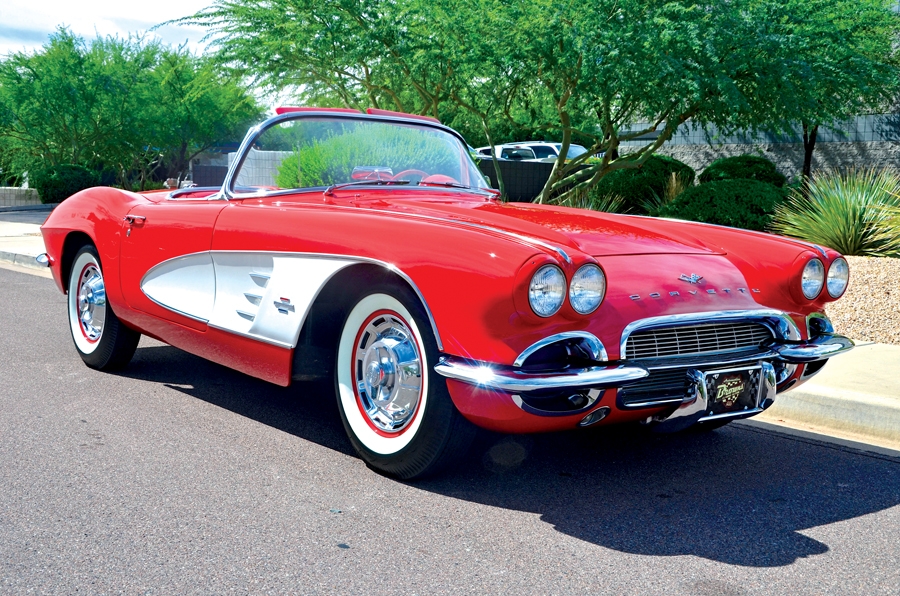
And as the door comes up, I’m looking at this 1961 red-on-red Corvette convertible. Wow. And I went from talking up here to, “Ty, that’s a cool car.” It was the moment of clarity for me.
John Garrett [00:07:42]:
I’m like, almost like a Ferris Bueller’s Day day-off kind of moment where it’s like, right, exactly.
Marc Mandell [00:07:50]:
And that was it. That was it. That was the day I was like, I’m hooked. I’m hooked. Give me all of this.
John Garrett [00:07:55]:
That’s awesome, man.
Marc Mandell [00:07:56]:
I still think about that car. Yeah.
John Garrett [00:07:58]:
And so then where did it go from there? Was it, you know, immediately, or was it more of had to wait till you got adult money sort of a thing, or how did that evolve?
Marc Mandell [00:08:07]:
So it was pretty immediate. Ty had a ’55 Chevy And we started restoring it. So we pulled it apart and we were doing bodywork and learning about engines and transmissions and camshafts and valves and timing and all that. And then I got my first car, which was an ’86 Saab 900. And that car was kind of fun and cool. It was— here in Colorado, it snows. I would turn that thing on, 8 seconds later, somehow I’d have hot air. Yeah.
Marc Mandell [00:08:37]:
But it wasn’t a turbo, it was a dog. But it was a cool first car. That was my love machine. And so I started working on that. And then shortly after, it was kind of after high school, I worked at a Corvette shop.
John Garrett [00:08:48]:
Oh, okay.
Marc Mandell [00:08:49]:
And that’s where it really kind of took off, was between owning DSMs. Those were the Talons, Eclipse, Lasers. I don’t know, maybe from the early ’90s. Yeah, they were turboed, all-wheel drive. We don’t have Evos and STIs today without those cars. They were kind of ahead of their time.
John Garrett [00:09:06]:
Yeah, yeah.
Marc Mandell [00:09:06]:
But once I started getting into those, my own cars, and then working at the Corvette shop, it really— that’s where all the magic really happened.
John Garrett [00:09:13]:
Yeah, well, that’s awesome, especially when it’s other people’s Corvettes, you know, then you’re getting able to get in there and all that. Yeah, exactly. I don’t have to buy all these and work on them, and then you could perfect your craft and learn all these different things and how to tweak them and get them to go faster and have more power and do all these things. And, and, uh, do you have a— one of the favorite projects you’ve done, or some of Do you have your favorites? I do, yeah.
Marc Mandell [00:09:36]:
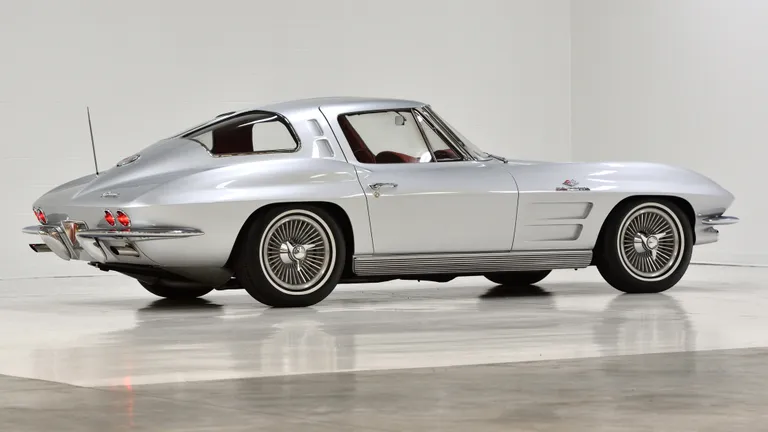
And for me, the cars, the thing about cars, and it’s probably why I’m in construction now, is it’s all process. It’s all order and sequence, right? When you’re putting an engine together, you start at the bottom and you work your way up and then boom, you have this engine. So, yeah, finding a lot of horsepower is awesome and great, but for me, it was learning how they worked and how they went back together and then having that like, “Man, I took that thing all the way down.” and built it up. And when you slide the key in and your nerves are racked and you turn the key and then it hits— oh my God. Yeah, yeah, yeah. But yeah, some favorite projects— I did a restoration of a ’63 Corvette split window, which is— I still remember the guy, the car. It was a silver paint, black interior. We did the paint, engine, trans, bodywork, suspension, trailing arms.
Marc Mandell [00:10:27]:
We did the whole thing. And He drove that every day. He drove that car every day, which you don’t see them that often. And to just have it driving every day, it— man, it’s, um, that ’63 split window, boy, they’re good-looking cars. Yeah, that was a great project.
John Garrett [00:10:47]:
Yeah, and that whole driving it every day thing, I think, is interesting because why else do you have the car to leave it in your garage covered and whatever, and you pull it off just to show your friends and then put the COVID back on? Or is it only drive it when it’s sunny out once on Sundays, you know, once a month type of thing? Or why the heck not? I mean, just go nuts, man. Like, what are you doing?
Marc Mandell [00:11:09]:
That’s it. Yeah, they’re not meant to sit. That’s right. Get them out and go drive them. That’s what they’re meant to do.
John Garrett [00:11:15]:
Yeah, because I mean, I was just curious on your take on it because I mean, from my perspective, it’s like, well, that’s why you have it, right? I mean, let’s go have some fun with it. Let’s go enjoy it. Now you don’t have to go putting on 30,000 miles a year and driving cross-country and all these crazy— but, you know, drive it around and, you know, park it at the very back of a lot so no one can door ding it or get anywhere near it. Or I would anyway, because it’s like, yeah, like just park at an angle, take it up 4 spots. Like, I don’t care. Like, you’re not parking. I don’t care.
Marc Mandell [00:11:44]:
This thing, please don’t park near it.
John Garrett [00:11:46]:
Yeah. I’d rather get towed than you park next to my Ferrari or, you know, split-window Corvette. Like, don’t even— yeah. As if I have all of those things. But if I did, that’s how I would operate anyway. But that’s cool, man. So what other projects? I didn’t mean to interrupt your flow there with that, but I could tell that you have a lot of cool things that you’ve worked on and projects that you’ve done that just, you know, bring smiles to your face.
Marc Mandell [00:12:08]:
Yeah, all good, man.
John Garrett [00:12:09]:
All good.
Marc Mandell [00:12:09]:
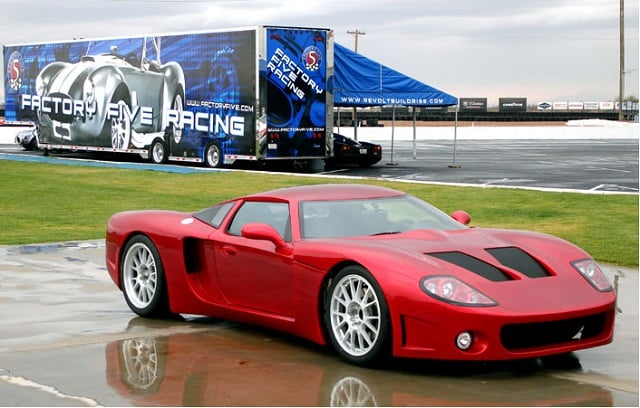
It’s fun having the conversation and connecting a bit. I built a GTM supercar, so it was a kit car. You buy this kit, it’s a chassis and a body, and then you buy a totaled Corvette and yank everything out of it. And you put it into this car. And, uh, they’re unique because you don’t see them. I’ve never seen one on the road aside from the one that we built. Something about taking a bucket of bolts and a pile of parts and putting it together and then having this really cool thing that turns heads and that people haven’t seen and makes really good loud noises. Yeah, it butters my biscuits, man.
Marc Mandell [00:12:47]:
Yeah, it’s It’s one of my favorite things.
John Garrett [00:12:50]:
Well, that’s gotta be so empowering to, yeah, like you said, you got a pile of bolts and you got a book of instructions that I can’t even imagine how big it is. And then, you know, you build this thing and then like you said, you slide the key in and then run and then there it is. Now we’re going somewhere, you know, and that’s wild. I mean, you know, I mean, cause it’s one thing when I was a kid, like, you know, you make like a plastic model or, you know, whatever, which is also cool. But this is just life-size and it’s actually transporting humans and it’s, you know, an actual vehicle is really neat, man. That’s really cool. And it’s got to be really satisfying, I guess, at the end to just be like, hey, look what we just did.
Marc Mandell [00:13:28]:
Yeah, it’s very satisfying. If you build cars, you’re never done building a car. Ah, and I found over my time that I used to do some road racing stuff, and people who build the cars are rarely the ones who, who.
John Garrett [00:13:42]:
Race them, who drive them.
Marc Mandell [00:13:44]:
Ah yeah, because they know what it takes to go into it, and They’re not going to go that extra 1,000 revs, but the driver’s like, no, I’m going to use those extra— I’m going to use whatever’s in there.
John Garrett [00:13:53]:
Yeah, yeah, yeah.
Marc Mandell [00:13:53]:
Because you’re never really— you’re never ever done. You know, the car, the GTM, was done, but it was never— it’s never done how you want it to be done.
John Garrett [00:14:01]:
There’s always a little more. There’s always a little extra, little, a little extra, little extra, little something. Yeah. That— and so does this translate over to work? I mean, it sounds like it does. I mean, you referred to it earlier as this is probably why I’m in construction now. So, you know, does that Does the car background and the love of cars translate over to what you’re doing now?
Marc Mandell [00:14:19]:
Kind of. I think what mirrors each other is the structure and the process, right? Whether you’re building a custom home or you’re doing a remodel, it’s sequenced and you do it in a particular order to get a result that you’re looking for. And I do like that. It’s kind of the same thing, right? It’s tearing it down, fixing it or making it different, and then building it back. Back up again.
John Garrett [00:14:41]:
And is this something that, that you talk about with clients or with colleagues, the car side of things? Or maybe it comes up sometimes, or.
Marc Mandell [00:14:51]:
Sometimes not as much as I would like it to. Yeah, but I know not everybody’s into it like I am, and I think cars are different than they were 30 years ago and how they’re seen. Yeah, right. It’s like, I don’t know anything about tech, dude. I need my phone to do what it needs to do. I don’t care about anything that goes into building it. And I think that’s how people look at cars. It’s just an A to B.
Marc Mandell [00:15:14]:
They don’t look at it like— I still name my cars. They each have a personality. If you have one Ford Explorer Sport that came off the assembly line right before the next one, same model, same colors, they’re different cars. They talk to you differently. They have different personalities. And I like connecting with that with them. So I don’t know if everybody sees cars the same way I do. So it doesn’t come up as, as often as I’d like, because I will— I am convinced, John, that in the beginning God said, here’s pork and here’s turbochargers.
Marc Mandell [00:15:46]:
And then look at what we did with it. We built cities, right, on pulled pork and turbochargers.
John Garrett [00:15:54]:
That’s amazing. That’s so funny, man, because I mean, there are— I mean, I know a little bit about cars. I can appreciate cars for sure. Like, I up here in Northern Colorado, there was a car show that was a part of a festival, fall festival that was going on, Harvest Fest up here. And, and yeah, and I can walk through and be like, wow, that’s a lot of work to make a 60-year-old car look like it’s brand new. And, you know, and I don’t know what that little hat on the engine does, but I know that it’s amazing and it’s not what came with it when you originally bought the car, but now you had to cut a hole in the hood to have the engine pop out of it. That’s how big the engine is. But it’s like, I can appreciate, you know, the work and the love that goes into, you know, to something like that.
John Garrett [00:16:43]:
But you’re right. I mean, a lot of people are, it’s just a utility that gets me from point A to point B and I don’t need anything above that. I don’t even need to know anything. I mean, no one changes their brakes anymore. No one changes their oil anymore. No one, you know, does that on their own anymore, partially because I think the car manufacturers make it so you can’t. I mean, like, it’s impossible to get up in there and get the stuff, like, on your own nowadays. It’s, it’s, you open the hood and the engine looks just pretty and it’s all covered in plastic covers and all these things.
John Garrett [00:17:12]:
It’s like, well, I don’t even know what to take off to do the thing that I want to do, you know, anymore. So it’s, it’s a, it’s a one-two of like the car manufacturer doesn’t want you to. And also people just stopped caring, which is sad because, you know, there’s a lot of fun to be had with that.— There is.
Marc Mandell [00:17:27]:
And it’s just people moving on to other things. When I look at the new cars, EVs, I think that electric vehicles will do for petrol what petrol did for the horse. I think it’s going to save it. Who cares if gas jumps up? I’m not driving my 600-horsepower monster every day. But where we live, there’s a bit of a hill. And I am a summer guy. I am not terribly winter-positive. I look at snow and evergreen trees the same way.
Marc Mandell [00:18:00]:
I want to go visit them in the mountains. I don’t want to be in them. And part of that is because as it’s— as cars are pulling up a hill, a Porsche or a Vette, or I mean, I guess a Mustang to some degree— sorry Mustang guys— Lambos or whatever it is, it’s just hearing that choir come from the exhaust system is— it’s pretty awesome. Yeah, it’s just the best thing. We just look at things a little differently, that’s all.
John Garrett [00:18:26]:
Absolutely. But then when you come across a car person Man, it’s magic. Yeah. Now, now we’re going to— weeks are going to go by before we realize, hey, we should probably sleep or go home. Like, this is crazy. Like, we should probably— yeah. Like, yeah, that’s, that’s amazing, man. And how much do you feel like it’s on, you know, like the leadership of an organization to get people to share their ANDs and find out what those are versus how much is it on the individual to just maybe just share a little bit with their peers and see where it goes?
Marc Mandell [00:18:57]:
I think anytime you can lead with empathy, that strength and empathy is— it only comes from perspective. Yeah. So holding space to understand another’s perspective is powerful. Yeah. I think people respond really well to that. They respond strong to that. I’m a textbook extrovert. I get fulfillment from being in groups of people, talking with people, And still, I don’t share car stuff with everybody because I want to meet them where they’re at.
Marc Mandell [00:19:26]:
If they’re not into cars, that’s cool, but I want to meet them where they’re at because just because they’re not into cars or I’m not into whatever it is they’re into, we still have a good conversation and share a little bit about each other.
John Garrett [00:19:38]:
Yeah, well, I mean, I think that’s an interesting perspective that because you are extroverted, people would automatically think, well, you’re just going to talk about cars, you’re going to talk about yourself. But you’re actually the opposite, where with the empath side of you pops up where, no, no, I’d rather just talk about you and what lights you up and your and whether I care about it or not or even understand it. That’s the basis of the conversation probably is going to be your thing as opposed to me and, you know, my and and whatever. So that’s an interesting perspective there that, you know, observation of, you know, it’s going to be a great conversation they think, because we’re talking about their hand, we’re talking about them, we’re talking about, you know, what that is. And I feel like we’re scared to inject ourselves. It comes across as selfish or it comes across as dominating or whatever. And it’s like, yeah, but if you really look at it from the outside, they’re the only— we’re talking about them the whole time. It’s like, well, yeah, I should be able to say a little bit of something that I’d like to do, or, you know, I should be able to throw in my two cents about something.
John Garrett [00:20:42]:
And yeah, I mean, it’s not the lead, like, you know, right out of the gate, you know, how my name’s Marc and I love cars. It’s like, okay, well, slow down, buddy. Right. You know, but you know, if you meet somebody at a networking thing or just out, you know, it’s like, hey, what do you love to do outside of work? You know, I’m really into cars. What about you? And then it’s innocent. You know, it’s like, all right, if it’s cars, awesome. If it’s not cars, also awesome.
Marc Mandell [00:21:08]:
I think the concept of what’s your and is fabulous. And I remember when you and I first got connected, it was about that. And it’s such a powerful thing. I think we do get kind of caught up in deliverables and all that other whatever when everybody— I’m 40— everybody by my age has got a train car of baggage right outside. And we’re all just trying to do the best we can, and we’re just trying to do our thing. And this thing out here in the world can be a mother. And so Whatever your thing is, is awesome. Enjoy what you enjoy.
Marc Mandell [00:21:45]:
You know what’s funny? This is kind of off topic. If we were in a restaurant or someplace and there was 30 people there and we asked all 30 people what color orange the wall was, we would get 28 different answers. What’s funny is that all the people who have made it, the successful, they’re kind of at the end, they all say the same stuff. They all talk about the same stuff. And for humanity to not agree on anything except that, I think is telling. And part of that is empathy and perspective. And it’s not all about me. And if I can hold space for someone to share something that they’re passionate about, I think it makes everything a little bit brighter and more interesting for sure.
John Garrett [00:22:27]:
Well, you also get to see them alive. I mean, they’re fully activated. I’ve accidentally created a podcast where all of my guests are fully activated. Related. You’re talking about cars. Like, this is amazing. If we were talking about flooring, it’d be fun, but there would be part of it that it’s not cars.
Marc Mandell [00:22:43]:
I mean, it’s not cars.
John Garrett [00:22:45]:
I mean, you know, like, it’s— and, or whatever someone’s job is, accounting, law, you know, engineering, tech, whatever, you know, work is sometimes fun, but sometimes it’s work. Where your end is always awesome. Always. You know, even if your car broke down, it’s still great. I mean, you know, like, it’s still an awesome story. And so, So, getting to that level and holding space for someone to be able to come alive and blossom a bit is really magical. It’s really cool. And it’s just don’t do it at the expense of you not being able to blossom.
John Garrett [00:23:17]:
And that’s the part where it’s like, okay, now it’s my turn a little bit, sort of a thing, or into the conversation, just throw it out there. And worst-case scenario, no one bites. “Like, you know, my bad.
Marc Mandell [00:23:32]:
No foul.”.
John Garrett [00:23:33]:
“I shot my shot.” “Yeah, exactly.” And so, I think that’s really cool. So, do you have any words of encouragement to anybody listening that has an AND but they feel like it has nothing to do with their job or no one’s going to care about it at work?
Marc Mandell [00:23:44]:
I think whether you decide to keep it close to the vest or not, when the moment comes to share about it, stand up and don’t feel like you have to observe. Be about what you’re about. You’ll find out quickly who’s cool with different perspectives and who aren’t. We don’t get much time here. You blink and you miss it. And whatever you’re about, be about it. And it’s okay. And enjoy what you enjoy because long days, short years, it goes quick.
Marc Mandell [00:24:16]:
So, enjoy what you’re about.
John Garrett [00:24:18]:
Yeah, absolutely, man. I mean, it’s so true. And so many people, “Well, I’ll get to it when I retire. I’ll get to it later.” and then you forget and then it goes dormant and then it goes extinct. I’ve talked to so many people that are, you know, nearing retirement and they say, you know, I don’t know what I’m going to go do. And that’s like scary to me.
Marc Mandell [00:24:38]:
Like, holy cow.
John Garrett [00:24:40]:
Same. Yeah, man, you have a lot of years left and money. Like, what are you doing? Like, you don’t know what you’re going to wake up for anymore besides work. What are you doing? Like, this is crazy. What are you doing? Yeah. I mean, priorities are upside down. Like, yeah, sure. Make a living and be proud of the work you do and like the work you do and the people you do it with.
John Garrett [00:24:57]:
But there’s so much more than just that. That’s really what What’s Your And is all about is just, okay, there’s that, but, and what? Like, who else are you? Come on now. There’s other parts. Let’s bring them out.
Marc Mandell [00:25:07]:
Let them play. Come on now. Yeah. Yeah. I don’t really care where you’re from. What’s your and? Like, yeah, you’re in those typical networking questions. So, where are you from?
John Garrett [00:25:15]:
What do you do?
Marc Mandell [00:25:16]:
Yeah, exactly. How’s it going? You know, what’s your and?
John Garrett [00:25:19]:
What do you— How about this weather, huh?
Marc Mandell [00:25:21]:
Oh Lord, how about this fall weather? Yeah, yeah. Give me something to work with, man. What’s your hand?
John Garrett [00:25:28]:
Yeah, what’s the deal? Light up. Let’s like, just quit, quit giving me these go-through-the-motions nonsense, right? So cool, man. Well, this has been so fun having you be a part of this, but I feel like it’s only fair since I rudely peppered you with questions at the beginning that I turn the tables, make this the Marc Mandel podcast, and, uh, I’m all yours. Whatever questions you got for me, let it rip.
Marc Mandell [00:25:49]:
Sweet biscuits, man. I would love to know what the light bulb moment was for you for comedy when you were maybe thinking about it or you did it once or it was like, oh, oh, this checks some boxes that I didn’t think it would check.
John Garrett [00:26:04]:
So I was standing at a garage and a garage door opened in 1961. No, I’m just kidding. Yeah, that’s your story.
Marc Mandell [00:26:10]:
I was like, wow, this sounds really familiar. Great. Cool.
John Garrett [00:26:12]:
We all had the same friend. Um, no, no, it’s, uh, yeah. So I, I had only in college, David Spade came, but he was Saturday Night Live and that’s not like real comedy to me. Like, I mean, it wasn’t like standup. I mean, he was doing standup, but it’s still like, it’s an SNL actor character, you know, like whatever. So that was the only standup that I had ever seen outside of, you know, like Eddie Murphy Raw, like VHS, you know, like, or like a Louie Anderson special or something like that. Maybe like a Johnny Carson every once in a while if I was able to stay up late or something. It’s not like a job.
John Garrett [00:26:48]:
Like, that’s not a thing that people do. Like, it’s just, I don’t know what it is, but it’s not a career. Like, you don’t, like, that’s not a job. And so it was more of just a fascination, I guess. I mean, I grew up with a lot of like In Living Color and Kids in the Hall, SNL back in the days when it was really amazing, which is very different than standup, but still, like, I mean, it’s not a career. Like, that’s, that’s nuts. And so when I started with PricewaterhouseCoopers, we were in LA in Pasadena. For a training and it was a 4-week-long training and you could fly home on the weekends and whatever, come back.
John Garrett [00:27:19]:
But on Thursday night we would go to the Improv in Hollywood on Melrose and Whose Line Is It Anyway would film their show in studio and then they would come down to the Improv. It’s like a 3-hour show and in the middle would be 45 minutes of Whose Line, completely uncensored, just, and in a pretty small comedy club. And then after you, you go to the bar and you like talk to Drew Carey and like the, and then before and after was standup. Like one night Adam Sandler came in at the very end just to try out some stuff. Like, it’s just totally make-believe world from where I was from, St. Louis, you know, like in small town, like, this is crazy. And so there were some of the comedians that were really, really funny. I mean, just lights out.
John Garrett [00:28:04]:
And then there were some that were like, well, I could be as not funny as that guy. And you know, this is Hollywood, like, and I live in St. Louis. Like, this is, of course, not realizing that you can move to LA, you don’t need permission.
Marc Mandell [00:28:16]:
You can just do it.
John Garrett [00:28:17]:
Yeah, right. And so I went up to the open mic in the Funny Bone in St. Louis and Westport and did an open mic. I went the week before to watch just to make sure and what’s it all about. And then I just got more confident. I was like, okay, I can’t— I’m not going to be the worst person that’s ever done comedy like this. There’s a lot of crazy. I mean, and it’s not even bad, it’s just crazy.
John Garrett [00:28:37]:
It’s worse than bad. And so I was like, well, I’m good. I can at least give it a swing and tell the grandkids one day and like, hey, I did it. And so what’s funniest about the story though, is the night before I went over to my parents’ house, we were having dinner and I was like, yeah, so I’m going to, you know, I’m going to do this. And they knew that I was going to go the next night. And so I, I had a legal pad of joke ideas, just concepts that I, of course, the legal pad I took from work and, you know, like, and what, while I’m supposed to be working, I’m jotting, hey, that’s a funny idea. This is a funny idea, whatever. So I read through all the joke ideas now in my parents’ defense.
John Garrett [00:29:12]:
Defense. It wasn’t the full bit. It was just the concept. But I read through this whole legal pad of ideas. And the only responses I got was my dad once said, we didn’t raise you that way. And my mom at a different one said, you can’t say that. All the rest of them, no response.
Marc Mandell [00:29:32]:
Good notes. Okay.
John Garrett [00:29:33]:
Not just crickets. And then we didn’t raise you that way. Crickets. You can’t say that. Crickets. Like, and I’m like, Oh no, I thought all these were amazing. And so I went over to my buddy’s place and we figured out, okay, here’s the ones maybe to do. And then the next day though, that night we’d go to the comedy club.
John Garrett [00:29:52]:
I had my mom holding a video camera because I didn’t know that you put it on a tripod. Like it was my mom holding the video camera and she’s shaking from laughing so hard at the jokes that just the night before, nothing. And so, and my parents were laughing the hardest out of anyone in the room. And I was like, you gotta be kidding me right now. This is nuts. That’s when I was like, oh, this is great. And now sure, it wasn’t amazing, but for the first time it was pretty solid. And I was like, all right, like, let’s just keep going.
John Garrett [00:30:23]:
And it’s just a fun outside of work, creative, use the other side of my brain, make people’s lives a little bit better from laughing. And let’s just see where it goes. Thing. And I did a little bit of improv as well with comedy sports, which was kind of that short form similar to Whose Line. But then at some point, the fork in the road where they become very different, I would imagine cars and motorcycles, it’s, well, they’re the same, but then they’re not, you know, type of— but then they’re not. Yeah, I would imagine, right. You know, something like that. But yeah, but that’s, that’s really how it got started was watching live of like, oh, Oh, oh, wait a minute.
John Garrett [00:31:02]:
It’s not all arenas and laugh tracks that they pipe in and edit or whatever. It’s sometimes they tell a joke and no one laughs.
Marc Mandell [00:31:13]:
They’re workshopping some material.
John Garrett [00:31:15]:
This feels more real. Yes. And attainable. It’s not, you know, like Eddie Murphy Raw and, you know, or Delirious, you know, like just in a theater of like, or an arena, you know, like a Steve Martin. Like, it’s just like, this is crazy. Like, you can’t go from me to that. But I can go from me to that person right there that just told a joke in front of 150, 200 people and nobody laughed. Well, I could, I could also do that.
John Garrett [00:31:38]:
Like, I could also make people not laugh.
Marc Mandell [00:31:42]:
That’s how it all got started.
John Garrett [00:31:44]:
Cool.
Marc Mandell [00:31:44]:
I love that. Speaking of cars, what was your first car, year, make, and model, and what was always bumping in it?
John Garrett [00:31:54]:
Okay, so this is actually an amazing story. So my first car was a 1968 Mustang.
Marc Mandell [00:31:59]:
My man, attaboy! Cool.
John Garrett [00:32:00]:
It was It was actually my mom’s, bought it new in 1968. And then my grandparents had it and then I got it. It was really funny though, because it was a 6-cylinder and everyone is like trying to crap on it in high school. And I’m like, it’s still a cool car. Like, what are you like? What? Well, it’s only a 6-cylinder. And I’m like, yeah, but what? You’re driving a, like a station wagon.
Marc Mandell [00:32:27]:
You rolled up in a Datsun, homie. Yeah. What are we talking about here?
John Garrett [00:32:30]:
Yeah. Like, what are you? I actually took out the original. I mean, everything was original. And so I took it out and put in a CD player into the car. And so it was, yeah, exactly. Yeah, it was crazy. So yeah, Metallica was in those days, probably Justice for All, Black Album. And I was probably always in it.
John Garrett [00:32:53]:
Those were the days, man. No AC, windows down. You had the little triangle windows in the front that you had to angle backwards so wind would blow on you and leather seats. So it’s still hot even in winter. It’s like, this is weird. Like I’m sweating, but it’s like, yeah, exactly. Like, I don’t know how people did that back in the day, but yeah, that was fun. That’s awesome.
Marc Mandell [00:33:13]:
Well, in my Saab, I too was bumping Metallica Black.
John Garrett [00:33:16]:
There you go. Okay.
Marc Mandell [00:33:18]:
Yeah. Yeah. And then you have asked hundreds of people about their and. What’s something that you’ve learned about yourself from hearing all those answers?
John Garrett [00:33:26]:
I guess I’ve learned that I’m genuinely curious in what lights people up. And I also won’t take generic answers. It’s really funny, like, because people want to say that their and is family and it’s not, it’s not your kids. It’s not your family. And I’ve had to learn to, when I’m speaking at conferences and things like this, is explain to people there’s a work you, there’s a family you, but then there’s a you that’s just you. And that’s the you that I’m talking about, the you that existed before family, before you knew your spouse, before you even had a girlfriend or a boyfriend, before you knew what work was or who worked or whatever. And so, like, that’s the you. And it’s wild because, you know, some people in it, even in like a small group, people have this really heartfelt story or whatever and about their kid or about their something.
John Garrett [00:34:17]:
And people are like, oh, that’s so great. I go, yeah, that’s not what I asked you.
Marc Mandell [00:34:20]:
You.
John Garrett [00:34:21]:
And then people are like, holy crap. And I’m like, yeah, no, I wrote the book on the thing. That’s not your end. That’s adorable. And that’s part of who you are. But I’m talking about just you. And it’s wild to me how people can’t go there right away. Their ego steps in and says, don’t share that side of you.
John Garrett [00:34:42]:
Share the smart, hardworking, money-earning side of you because that’s the only side that matters. But that wasn’t the question, ego. That wasn’t the question. The question was, who else are you? And it’s trippy how people, it’s hard for them to either say it or even realize what their ‘and’ is. And so that’s, that’s, I guess what I’ve learned is I’m fortunate enough to not have that as a thing, as a problem or as an issue, and to give those people some grace of like, well, you know, you didn’t know. But now you do. So go work on it. I guess I’m just fortunate that the, the worldview that I grew up in— my dad was career Air Force, so I grew up as a military kid.
John Garrett [00:35:25]:
And yet my dad never once talked about anything military at home.
Marc Mandell [00:35:30]:
Nothing.
John Garrett [00:35:31]:
Like if he didn’t wear his uniform to work and come home in it, I wouldn’t have known that. My dad was in the Air Force. We had model trains. Was he good at it? No. We had a sailboat. Was he good at it? No. We canoed. Was he good at it? Kind of, but no, really, like, we had all these other hobbies and passions and interests that he had later in life.
John Garrett [00:35:49]:
He got into cycling and, and he had like a scooter that he would ride and, and he would paint, you know, and it’s just what lit him up. And it was a cool role model to see of like, oh, well, I thought that’s how everybody was. And then when I got out in the real world and started working and seeing people, I’m like, oh, wow. Like, that’s not how a lot of people operate. And so I guess what I learned about myself in the longest answer possible is that I’m fortunate to have the dad that I did and the worldview that I did.. And to not have an and be foreign to me, but to be, well, that’s just what people should do.
Marc Mandell [00:36:22]:
I love that. I love that your dad was able to show that to you. I’ve heard a lot, sins of the father are passed to the son. Yeah. But that is fabulous. I try to do with my kids something similar.
John Garrett [00:36:36]:
I love that. Yeah. And one time I was speaking at a conference and after, a younger guy came up and he was like, well, I haven’t done it since we had a kid and trying to save money for my kid and whatever.. And I was like, well, you know, that’s fine. But like to go buy a kayak used on Facebook Marcetplace is a couple hundred bucks. I mean, like, this isn’t life-changing money that we’re talking about. Like, it’s not buying a ’61 Corvette and redoing it. Like, that’s an investment.
John Garrett [00:36:59]:
Like, we’re talking about buying a kayak and just go kayak once in a while. And I said to him at the end, I said, well, you know, here it is, is, you know, when your kid turns 18, are they going to want the compounded interest from $200 or are they going to want 18 years of their dad being fully activated? And I’m going to say the second one, but you have to decide for yourself. It’s definitely the second one. And it’s the ego side that won’t allow us to maybe do that and just be like, you know, hey, like you said, you know, like long days and short years, like, what are you doing here? Like, why are we here? And, you know, and if it’s, you know, my whole reason for existing on earth is to put in flooring, that’s crazy. Yeah, I enjoy it. That’s crazy. That’s crazy. Yeah.
John Garrett [00:37:42]:
Or to create a balance sheet that balances out. Or it’s to, you know, draw specs for a new building. It’s like, okay, but I’m sure that there’s bigger things that light you up on a deeper level. And so like, let’s go there, you know, and still like the work you do. And I’m not belittling it or discrediting it at all, but I’m saying there’s a bigger, deeper thing that lights you up and go there. I mean, similar to what you said earlier is like, you know, do the.
Marc Mandell [00:38:10]:
Thing that you enjoy. Enjoy it. I think as you’re explaining this, what’s refreshing and surprising to me was that your dad had that point of view. My parents were— their jobs defined them. My mother still works in the same building at the same desk in the same cubicle for 44 years, man, because that’s just how they did it. They found a job and that’s what they did. And I don’t want flooring to define who I am. I don’t want my family to define who I am.
Marc Mandell [00:38:38]:
I am many things, and I am cars, and I am tools, and I am family, and I am this.
John Garrett [00:38:43]:
Yeah, well, that’s why it’s an and, you know. It’s not what’s your or, you know. It’s not family or flooring or cars or— it’s no, no, it’s all the things. It’s all the things, good and bad. And so, you know, just embrace it and enjoy the ride, man. Well, this has been so fun having you be a part of this. This has been awesome, Marc. Thank you for being a living example of What’s Your Amp?
Marc Mandell [00:39:05]:
So thanks for being a part of the show. Appreciate you, John. This was great. Anytime to, uh, connect and talk shop. And yeah, this was lovely.
John Garrett [00:39:16]:
I really appreciate it. Yeah, and everybody listening, if you want to see some pictures of Marc in his cars and having some fun out there outside of work, or connect with him on social media, be sure to go to whatsyourand.com. All the links are there. And while you’re on the page please click that big button, do the anonymous research survey about corporate culture, and don’t forget to read the book. So thanks again for subscribing on Apple Podcasts or whatever app you use, and for sharing this with your friends so they get the message that we’re all trying to spread, that who you are is so much more than what you do.