
Tim is a Co-Founder & Ultramarathoner
Tim Vorhoff, Co-Founder of CreoValo, shares his journey from investment banking to becoming an ultramarathon runner. He explains how running began as a way to spend time outdoors after long workdays and eventually led to running a 240-mile race in Moab, UT. Tim Vorhoff discusses the mental and physical challenges of ultrarunning, highlighting the importance of adaptability, perseverance, and learning from setbacks. He connects the lessons from ultra races to his professional life, emphasizing consistency, resilience, and the value of relationships. Tim believes building rapport and understanding clients as people leads to more meaningful and enjoyable business interactions. He encourages listeners to embrace their passions and share them, creating deeper, more authentic connections at work and beyond.
Episode Highlights
· Running ultramarathons evolved from his love of mountaineering when investment banking limited his access to the mountains.
· Consistency and progress over time are more crucial to success than having any “magic” solution, both in running ultras and building a business.
· The hardest and most meaningful moments come from pushing through challenges, learning from failures, and adapting, especially during extreme races like the Moab 240.
· The skills and mindset developed through ultrarunning, such as perseverance and adaptability, directly translate to overcoming professional challenges and building strong client relationships.
· Being authentic and connecting as a human first, beyond professional credentials, leads to more enjoyable and effective business relationships.
Tim's Photos

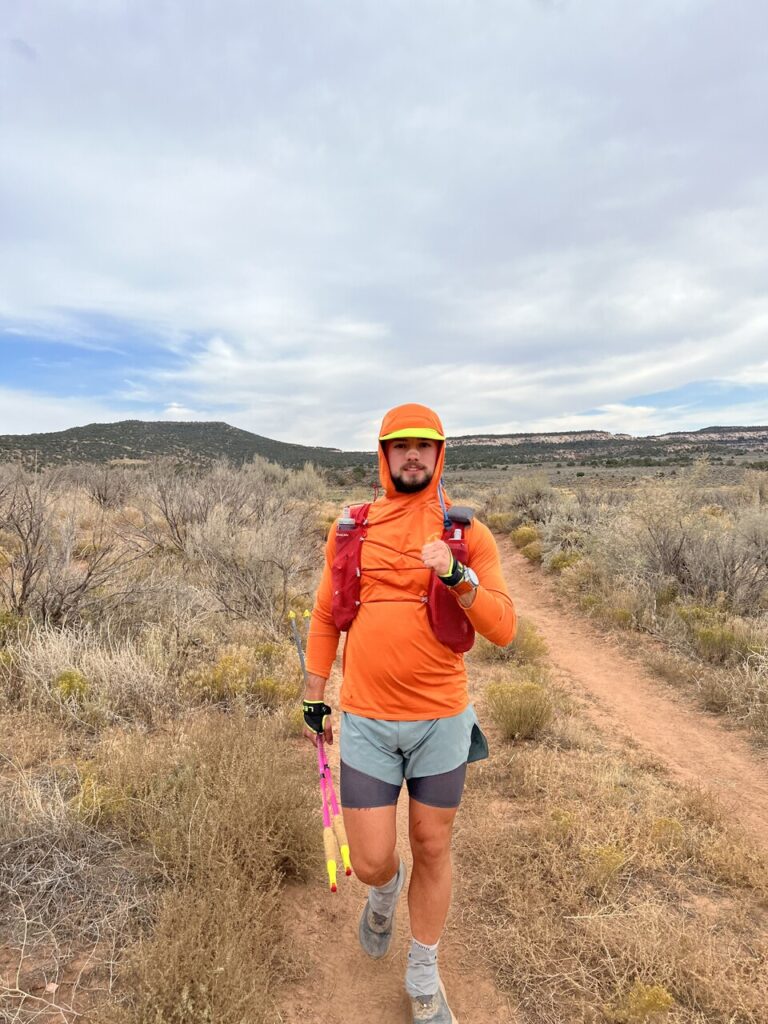

Tim's Links
Help Make Work Better
I need your help for 2 minutes to complete this important survey on work culture. Your anonymous responses will provide key insights to develop a new program for more positive and engaged teams.
Subscribe Now
 Apple Podcasts
 Spotify
 Podchaser
 Stitcher
 Overcast
 PocketCasts
 Acast
Acast iHeartRadio
 SoundCloud
Podcast Transcript
John Garrett [00:00:00]:
Hey, this is John Garrett. I’m passionate about making work more human, especially in this age of AI. I don’t just host this podcast, I also help organizations put people first through my keynote speaking, coaching, and What’s Your “And”? implementation programs. To learn more or to connect with me on LinkedIn or Instagram, I invite you to join the movement at WhatsYourAnd.com. Now let’s jump into this week’s conversation.
Tim Vorhoff [00:00:21]:
Howdy, this is Tim Vorhoff. When I’m not running, I’m listening to John Garrett on What’s Your “And”?.
John Garrett [00:00:42]:
This is John Garrett, and each Wednesday I interview a professional who, just like me, is known for a hobby or a passion or an interest outside of work. And to put it another way, it’s encouraging people to find their and, those things above and beyond your technical skills, the things that actually differentiate you when you’re at work. It’s the answer to the question of who else are you beyond the job title? And if you like what the show’s about, be sure to check out the award-winning book. It’s on Amazon, Indigo, Barnes Noble, Bookshop, a few other websites. All the links are at WhatsYourAnd.com. The book goes more in depth with the research behind why these outside-of-work passions are so crucial to your corporate culture. And I can’t say how much it means that everyone’s reading it and writing such great reviews on Amazon. Thank you so much for those.
John Garrett [00:01:25]:
And more importantly, changing the cultures where they work because of it. And if you want me to read it to you, that’s right, this voice reading the book, look for What’s Your “And”? on Audible or wherever you get your audiobooks. And please don’t forget to hit subscribe to the podcast so you don’t miss any of the future episodes. I love sharing such interesting stories each and every week, and this week is no different with my guest, Tim Vorhoff. He’s the co-founder of CreoValo, a financial consulting firm outta Austin, Texas, and now he’s with me here today. Tim, thanks so much for taking time to be with me on What’s Your “And”?.
Tim Vorhoff [00:01:56]:
Thank you. I’m excited to be here.
John Garrett [00:01:58]:
This is going to be so much fun. It’ll be faster than you running the ultramarathons.
Tim Vorhoff [00:02:03]:
The reality is that’s not hard to do. It’s not hard to do.
John Garrett [00:02:06]:
But I have 17 rapid-fire questions to get to know Tim right out of the gate here. Let’s start with a fun one here. Mountains or oceans?
Tim Vorhoff [00:02:13]:
Ocean.
John Garrett [00:02:14]:
Ocean. There you go.
Tim Vorhoff [00:02:15]:
And if you want me to go into detail, I’m happy to give you the reason why.
John Garrett [00:02:18]:
I would love to hear why.
Tim Vorhoff [00:02:19]:
For me, mountains have always been the challenge. When I Was in college, I used to see a mountain, I’m like, I wanna get to the top of it. And now I see a beach, it’s like, I wanna relax. That’s how the answers change.
John Garrett [00:02:31]:
Yeah. I mean, I live in Colorado and there are those, those people that do the 14ers, 14,000 feet above elevation, and you gotta leave at like 4:00 AM to get up there and down before the storms come. You, cuz you’ll get electrocuted and die. And I’m like, yeah, you know what? I’ll just look at your pictures. That sounds, that’s a lot of type 2 fun right there. And I’m not in the mood for that. So I love it, man. How about puzzles? Sudoku, crossword, jigsaw puzzle?
Tim Vorhoff [00:02:54]:
None. I’m not a puzzle guy.
John Garrett [00:02:56]:
How about a favorite color?
Tim Vorhoff [00:02:58]:
Ooh, I like orange.
John Garrett [00:02:59]:
Oh, interesting. Okay. How about a least favorite color?
Tim Vorhoff [00:03:02]:
I get bored with navy. I find like it’s too much of a safe decision sometimes, and I like it when people mix it up just a tad.
John Garrett [00:03:09]:
Yeah, just give a little tweak to it.
Tim Vorhoff [00:03:10]:
A little personality, you know?
John Garrett [00:03:12]:
Exactly. All right. I love it. How about you? More talk or text?
Tim Vorhoff [00:03:16]:
Talk. If I can get you on the phone, it’s just a heck of a lot easier. And I don’t know your experience, but sometimes the email limbo could be resolved by 5 minutes on a phone.
John Garrett [00:03:24]:
If there’s a second email back to me, I’m calling you because it’s like, this is taking way too long. We could do this in 2 minutes. How about Star Wars or Star Trek?
Tim Vorhoff [00:03:33]:
Star Wars. Absolutely. Never really watched Star Trek, but Star Wars, it was a movie I seem to continue to rewatch. I just watched— what was it? The one where Anakin is burning by the lava and he’s like, Anakin, you are the chosen one. And that scene is just so gold. And I’m like, oh, every time it gets me. Yeah.
John Garrett [00:03:57]:
Yeah. Yeah, no, I love it, man. That’s awesome. Are you a computer more of a PC or a Mac?
Tim Vorhoff [00:04:02]:
PC. Once you get the keystrokes with Excel and Outlook, it’s hard to go back to Mac.
John Garrett [00:04:07]:
Yeah, yeah, definitely. How about ice cream? You have a favorite ice cream flavor?
Tim Vorhoff [00:04:11]:
Vanilla. Vanilla or coffee, one of the two. Coffee if it’s not in the evening, vanilla if it’s any other time.
John Garrett [00:04:17]:
Okay, I like it. Yeah, because I mean, if you mess up vanilla, then get out of here.
Tim Vorhoff [00:04:21]:
Yeah, I just like it simple.
John Garrett [00:04:23]:
Yeah, yeah, I like it. Do you have a favorite animal, any animal at all?
Tim Vorhoff [00:04:27]:
I love my dog. But if I had to think more broadly, I really love— gosh, I forget what they were called. Maybe there was some type of monkey with like a tail that’s the equal length as their legs. And I went to the zoo the other day and I was watching them move through the trees and it was the coolest thing. They almost move in 3 dimensions and I was fascinated by them. I can’t remember the type of monkey, but it was a really, really cool monkey.
John Garrett [00:04:50]:
I like it, man. I’m on board. How about more shower or bath?
Tim Vorhoff [00:04:54]:
Shower.
John Garrett [00:04:55]:
Shower. Just time. Yeah, yeah, there you go. How about a favorite band or musician?
Tim Vorhoff [00:05:00]:
I love electronic house music, and right now my favorite artist is a guy named Max Steiler. I think I’ve seen him 3 or 4 times in the last year, and I love artists that when you go to their concert, there’s this created feeling and everybody is engaged with it in the same way. And when I go to his shows, the entire crowd is electric and everybody is absolutely loving it. And so, that’s what I love.
John Garrett [00:05:27]:
That’s amazing. That’s awesome. Yeah, that would be a pretty good job for him. I mean, like, you know, like, imagine an organization like that that you worked at, you know, like, if you went to corporate and that was it.
Tim Vorhoff [00:05:37]:
Well, it’s something that my friend was— he’s created this music company and he talks about when all these people are together in a room feeling the same thing, there’s an energy to it and you can feel it. And that’s the difference between sitting at home listening to a song and being out with 1,000 of your closest friends all feeling the same thing.
John Garrett [00:05:54]:
Compounding effect. I mean, it’s exponential, like they stack. I love concerts as well, so, uh, that’s very cool. How about, uh, a favorite number?
Tim Vorhoff [00:06:02]:
I can’t say I have one.
John Garrett [00:06:03]:
Okay, fair. Just in case they’re listening, we don’t want them to— positive ones, probably.
Tim Vorhoff [00:06:07]:
Maybe the first thing I’m thinking is number 1 because I’m number 1. That’s it. That’s a joke.
John Garrett [00:06:11]:
That’s where it starts.
Tim Vorhoff [00:06:13]:
Yeah, let’s take it from the top.
John Garrett [00:06:16]:
There you go. If you’re not first, you’re last. Yeah.
Tim Vorhoff [00:06:19]:
Rick and Bobby. I grew up in Charlotte, North Carolina, home of Talladega. So that movie hits home.
John Garrett [00:06:26]:
That’s a good one. That’s a very good one. How about pens or pencils?
Tim Vorhoff [00:06:30]:
Pens. There was a point in my life where I had bought maybe 20 different pens because I was determined to find my favorite one because I love writing and I found my favorite one. And since then I have used that pen pretty much exclusively. So that was maybe 7 years ago. It’s a Lamy, L-A-M-Y.
John Garrett [00:06:47]:
It’s a fountain pen.
Tim Vorhoff [00:06:49]:
So you can take out the cartridge, but the way it writes is really smooth and it’s nice.
John Garrett [00:06:53]:
When it comes to books, Kindle, real book?
Tim Vorhoff [00:06:55]:
I like audiobooks. Audiobooks is probably how I digest most of the books that I read. But if it’s not an audiobook, I like a physical book.
John Garrett [00:07:03]:
I’m same on that one. How about favorite actor or an actress?
Tim Vorhoff [00:07:08]:
Brad Pitt, because I think he’s really cool and I think we’d be friends if we ever hung out.
John Garrett [00:07:13]:
The fact you’re not friends right now is crazy.
Tim Vorhoff [00:07:15]:
Yeah, right? And I’ve been told I look just like Brad Pitt for the people listening in and can’t see.
John Garrett [00:07:20]:
I can see that. With 2 eyes, a nose, a mouth.
Tim Vorhoff [00:07:23]:
Yeah, right? Right, nailed it.
John Garrett [00:07:25]:
How about a toilet paper roll? You going over or under?
Tim Vorhoff [00:07:28]:
Oh, over. There’s only one right way to put the toilet paper. Okay.
John Garrett [00:07:33]:
I mean, I have to ask just to make sure.
Tim Vorhoff [00:07:35]:
This seems more like a screening question.
John Garrett [00:07:38]:
It’s an interview question to see if we should continue.
Tim Vorhoff [00:07:41]:
I used to date a girl that went the other direction, and every time she did, it was a mild furious reaction from me. It’s like, do you not understand how toilet paper works?
John Garrett [00:07:54]:
I’ve actually recorded, uh, 1,500— I’ve started 1,500 episodes, but I’m only on 737 because—
Tim Vorhoff [00:07:59]:
Because you had to cut them out.
John Garrett [00:08:01]:
Yeah, I figured. Sorry, we’re done. We gotta stop. Like, that’s it. Then the last one, the favorite thing you have or the favorite thing you own?
Tim Vorhoff [00:08:07]:
I feel like this changes every day you talk to me. I think lately it’s a guitar because I just started picking it back up and been having a lot of fun playing it.
John Garrett [00:08:13]:
Yeah, that’s very cool. So let’s talk ultramarathons. How did that get started? Because that’s not on accident.
Tim Vorhoff [00:08:20]:
Yeah, it was cheaper than therapy at the time. And so we went over that earlier. I got into ultra running because I used to be obsessed with mountaineering and being in the mountains. And when I fully started in investment banking— so you are a recovering CPA, I am a recovering investment banker— when I started in investment banking, I didn’t have time to go out to the mountains. And so whenever I’d finish work, I just was craving being outside. And so, I just started running. And so, I kind of had a policy, if I finished work before midnight, I’d get 2 miles in at a minimum, go out, get my miles, come back, go to bed. And that eventually progressed where I just, every day, it just was what I’d look forward to is that time outside moving my body.
Tim Vorhoff [00:09:03]:
And I like to say this because it’s funny. My mom was a marathon runner and she ran her fastest marathon time while she was pregnant with me. And so, I was born running. So, I was either cursed or blessed with it.
John Garrett [00:09:14]:
That’s amazing.
Tim Vorhoff [00:09:14]:
And so, she ran that marathon with me. And when I was at Evercore, the bank that I was at, after the first year, running just kind of became this consistent ritual. And before I had started working there, I’d read a book, physical copy book called Born to Run. And it was the first time I read a book where I literally couldn’t believe human beings were capable of doing the things they mentioned. They were talking about people running 100 miles through the mountains of Colorado. And my reaction was, it was unbelievable. Up to that point, I had never, I never knew people went further than a marathon. It was like mind-blowing to me.
Tim Vorhoff [00:09:51]:
And at that moment I was like, I want to do that. Like, that sounds so cool. And so fast forward 2 years after that, I ran my first 100-kilometer race or 62 miles. And man, I felt like Superman afterwards. I felt like I could do anything. And it was kind of this natural progression of just wanting to run and wanting to push myself. And after that race, I kind of continued to run. I didn’t have a coach.
Tim Vorhoff [00:10:15]:
I didn’t have any formal training. It was kind of, Learning through missteps along the way and talking to friends who’d gone further. And then eventually got a coach, eventually started doing it really competitively, started winning races, and ultimately it culminated in the biggest, baddest race you could run in America, which is Moab 240, a 240-mile race, 4 states, 31,000 feet of incline, 31,000 feet of descent through the most beautiful part of America, in my opinion, And once I did that race, I closed the chapter and now I just run for fun again. So full circle.
John Garrett [00:10:51]:
240 miles, man. Like that’s— yeah. Cause I mean, the Leadville 100, I know here in Colorado and I’ve known a couple of people that have done it. It’s 240. It’s like, whoa.
Tim Vorhoff [00:11:02]:
Yeah. You multiply it by 2.4. So it’s a completely different challenge. Right. And the interesting thing is that the further the distance is, it’s not necessarily more or less challenging physically. There’s certainly are elements to it, but it’s, it’s the mental barrier of understanding, okay, like just kind of staying with it. But then there’s also like an educational curve where it’s learning kind of like car maintenance for your body though. Like learning to feel the different signals when I need water, when I need food, when I need rest, when there’s too much sun exposure and learning all those.
Tim Vorhoff [00:11:38]:
I learned through missteps. So through having problems and doing that in the past and then being able to recognize it when I’m experiencing it and adapting. So all those things are where things go wrong. They went wrong. I learned from it. And then that all culminated into being able to finish a race like that.
John Garrett [00:11:56]:
Yeah, that’s impressive, man. Like, how long does that take?
Tim Vorhoff [00:11:59]:
Took 105 hours.
John Garrett [00:12:01]:
So, so yeah, almost 5 days or—
Tim Vorhoff [00:12:04]:
Yeah, pretty much. Yeah. And so slept a total of 5 hours that race. Most of it was dirt naps. So the hardest part for me was like I had never had a race that extended over the period of multiple days. And so with a, with this race, you have to sleep at some point. You can’t put it off. Whereas with a 100-mile race, when I did it, I finished it in 20-something hours, right? So you can just keep going and sleep when you get home.
Tim Vorhoff [00:12:29]:
And the sleep was difficult because the first day it was over 100 degrees and I was running with all of like my dream people, you know, everybody who I’d seen online, who I’d like read about, I was now running with. And so I came out of the gates firing and it was hot. And 26 miles in, I get to the 3rd aid station and I start being violently sick, very dehydrated. And I remember going to the medic and everything in my body wanted them to tell me, Tim, you can’t run anymore. We’re pulling you out of the race. And I remember going to the medic after having vomited for 30 minutes. He said, well, how much salt have you been taking? And I’m like, well, I’ve been taking this much. He’s like, you need to quadruple that.
Tim Vorhoff [00:13:14]:
And he gave me 4 tablets. He said, finish throwing them, eat some spaghetti, and get back out there. I was like, ah, no, I don’t want to. Don’t make me do it. And the hardest part was that that aid station at mile 26, the next full aid station was 31 miles away.
John Garrett [00:13:31]:
Oh.
Tim Vorhoff [00:13:32]:
And so I was, I got in at 10 o’clock and then I didn’t see my friends or see another aid station to fill up with food, water, anything for another like 12 hours. And so what that means is that it put me behind. And so I didn’t have a ton of time for the rest of the race to be able to rest. And so what that ended up happening was I’d run, run, run until I couldn’t run anymore and then pull off into the side of the trail and just sleep for 30 minutes and then get back up and keep going. And there was only one period where I got to sleep in like the back of a car. And I remember sleeping for an hour and my friends wake me up and I’m like, no, no, no, we need more time. And he said, Tim, if you don’t leave in the next hour and a half, you’re pulled from the race. And I’m like, oh my gosh, don’t make me do it.
Tim Vorhoff [00:14:19]:
Don’t make me get back out there.
John Garrett [00:14:21]:
This is crazy. Yeah, that’s awesome, man. But then to finish, I mean, how’s that feel when you get to the end?
Tim Vorhoff [00:14:26]:
I’ll tell you, I scream like a maniac and just like every part of my being was just so excited. And I had done it in a way where I had 4 friends come up to be part, or 3 friends be part of my crew. So after mile 67, you were allowed to have people run with you. They can’t carry your load, they can’t do anything on your behalf, but having a companion. And so all 3 of these friends were with me at the finish line. They’d all helped me through this race and to share that moment with them, it was just powerful. And In some ways it felt complete. Like I had set out on this ultra running, not really knowing where it was gonna go.
Tim Vorhoff [00:15:04]:
And then I finished this race and afterwards I was like, you know, I’m ready to focus on other things. To prepare and train for a race like that, everything else in my life kind of got the leftovers. Relationships, work, everything, the hobbies. Just because you run 10 miles every morning, there’s only so much energy left to go into everything else. And so I was ready to shift gears after that. Yeah.
John Garrett [00:15:27]:
Yeah, because I mean, you went from investment banking where it’s, I would argue, too many hours on that, and then now it’s too many hours on— and so now it’s like, okay, now I know where the pendulum swings.
Tim Vorhoff [00:15:36]:
Let’s find a balance.
John Garrett [00:15:38]:
Yeah, let’s divvy up the pie a little bit differently than whole pies on one side or whole pies on the other side. That’s awesome, man. But it sounds like when you crossed that finish line, it’s like your soul was singing, like you’re alive, like on a deeper level. This is more than just my body made it. This is a deep, deep dimensional level of aliveness and activation.
Tim Vorhoff [00:15:57]:
Yeah. I mean, it’s just hard to explain something like that, you know, because running a 240-mile race, every— there’s no point along the way where it feels manageable. There’s no point along the way where you can tell yourself, oh, there’s only this much left.
John Garrett [00:16:13]:
Right. You know?
Tim Vorhoff [00:16:14]:
And so like, I remember being the one day in throwing up and I’m like, I have 240 13 more miles to go. Like, there’s no way to make that sound palatable. And I’ll never forget my friend who had done the race before. He was with me for the final. He told me, you know, don’t worry, then 18 miles, it’s all downhill. You’re easy breezy. You’re going to head home. And I saw him at the finish line and I swore him out.
Tim Vorhoff [00:16:40]:
I was like, you didn’t tell me the last 18 miles were the hardest miles because all downhill on super hard rock and rough terrain is excruciating. And so, I’m I’m sitting there and I’ve got 12 miles left and my legs are pins and needles. And I peel over and I start crying. And I look at my friend, he’s like, what’s wrong? And I’m like, these are supposed to be the easy miles. And it wasn’t easy.
John Garrett [00:17:07]:
That’s amazing, man. I love this so much. It’s so great that you set your mind out to it, but then you did it. But then that aliveness that you felt, just going out on a limb here, but have you ever felt that aliveness In corporate alone, you know, or before that especially? I mean, now that you’re a co-founder, it’s a little different.
Tim Vorhoff [00:17:29]:
I do now for sure.
John Garrett [00:17:31]:
Now that you, you’re able to tap into it.
Tim Vorhoff [00:17:33]:
There are the moments when I feel in alignment. So at Evercore, a lot of the work I was doing was heavily number-oriented spreadsheets, incredibly detailed, and I never interacted with clients. I’d interact with my colleagues who were rock stars, the smartest people you could work with. They were inspiring. But I didn’t have any personal relationship with my clients. But now when I meet somebody and I hear their situation and I know exactly how to help them and they’re open and receptive to it, and then we get an amazing outcome, it’s not that same crescendo moment, but it’s a moment of feeling in flow where like, I feel like I’m giving what I’m good at, they’re receiving it, and we’re going to get a great outcome. That feels really good.
John Garrett [00:18:18]:
No, that’s awesome. It’s almost being the buddy that’s running with—
Tim Vorhoff [00:18:21]:
Exactly. I’m now the pacer and not the—
John Garrett [00:18:24]:
Yeah, the pacer. There you go.
Tim Vorhoff [00:18:25]:
I’m not the competitor.
John Garrett [00:18:27]:
Yeah, no, that’s fantastic. Do you feel like any of the running— I mean, it sounds like there’s a whole bunch of things you listed that bring skills to work. How much does this apply, do you think?
Tim Vorhoff [00:18:38]:
It’s interesting because I knew you were going to ask this question, and at times, It’s almost like I’m too close to it to be able to tell you exactly how it applies. The biggest thing for me with running ultras was I would always have this mantra for every race, something that I just repeat to myself continually. And with Moab, the mantra was things change. So no matter when I was puking, when I was crying, I just remind myself that in 10 minutes I’m not going to feel the same way, that things are going to be different. And the only thing that matters is just making consistent progress. And we started this business 5 years ago. And in the beginning, we didn’t know whether we’d have anything real. And I thankfully started this business with my father and one other partner, and they had the confidence that, hey, we’re going to keep doing this.
Tim Vorhoff [00:19:29]:
And so for a long time, we were doing all this work but not seeing the financial results of it, but learning just that it’s not magic. It’s just consistency, consistent conversations, consistently helping, providing great value, doing good work leads to this exceptional result. But when the result comes, it doesn’t have this crescendo moment. It feels more like an inevitability. Like, this isn’t a surprise. We’ve been working towards this for a very long time. And you can’t prepare for a 240-mile race overnight. You can’t wake up one day and be like, I’m going to buckle down this week or this month or this year.
Tim Vorhoff [00:20:06]:
You do it over a very long period of time. Like, it took 6 or 7 years of consistent training to be able to run a 240-mile race. I think in that period, I ran over 11,000 So that gives you just perspective, right? You can’t just show up and do it.
John Garrett [00:20:21]:
Oh no, I don’t doubt that for a second. I mean, my mantra would be, don’t die.
Tim Vorhoff [00:20:26]:
That sounds like what some of my friends might tell me. We can save that story for another time.
John Garrett [00:20:31]:
Which I like. Things change. That’s a little more positive. It’s a little more— my don’t die mantra would get me about a mile and a half and then I’d be done. Like, 238 more to go. Yeah, you know what? I’m out. Like, I’m good. Where’s that spaghetti?
Tim Vorhoff [00:20:42]:
Like, let’s go.
John Garrett [00:20:43]:
Yeah.
Tim Vorhoff [00:20:43]:
I’ll get there at the end of the week. You start running on Monday and then you’re like, don’t worry. Just gotta stop running on Friday.
John Garrett [00:20:50]:
Right? Yeah, that’s wild. Yeah, that’s completely insane. But I think you’re exactly right. I mean, you know, like those skill sets or that adaptability or that mindset. I mean, it’s like, dude, I ran 240 miles. I think I can make it through whatever annoying thing this is, you know? Yeah.
Tim Vorhoff [00:21:06]:
And I catch myself sometimes though, like complaining over little things and I’m like, I’m tired today. I got 6 hours of sleep last night. And then I like, I’m like, oh wow, like, who am I to say anything?
John Garrett [00:21:18]:
You know? It’s like 30 minutes on the dirt along a trail in Utah, you know? Like, uh, so I think it’s great because, I mean, that’s all of you, you know? Like, I mean, asking you to not bring the running side of you to work is impossible, you know? Like, don’t bring your right arm. It’s like, well, what do you mean? Like, it’s—
Tim Vorhoff [00:21:36]:
Yeah, it seems silly. Yeah. But I think what’s better is that, like, most of my clients have no idea that that’s what I do. But I think that when they learn about it, it’s consistent with their understanding of how I work, right? Like, I think that for the clients that do know that, there’s this kind of mutual understanding that like, I know how to do hard things. And what we do is sell companies and you can’t do that overnight. It takes a very long time and there’s no magic to it. It just takes consistently showing up and kind of chipping away at it. And eventually you kind of get to a remarkable outcome.
Tim Vorhoff [00:22:12]:
the finish line or the goal line when the company sells and the money transfers. But if you are focused on the goal line, you kind of miss the, the fruits of the fun of building a company that’s more worth selling or kind of all the little things that happen in between.
John Garrett [00:22:26]:
And is there a reason why only some clients know and others don’t?
Tim Vorhoff [00:22:30]:
I think it’s just that when I’m meeting with people, I want to learn about them and their company because every person that we meet with has either inherited a business, grown it, started it, and their stories are extraordinary. I’m there to be the pacer. I’m not the main show.
John Garrett [00:22:45]:
There you go.
Tim Vorhoff [00:22:46]:
And the better we can understand the story, how they got started, what it allowed them to be successful, what is— where are they at today and where are they going, the more I can understand that, the better job I can do. And I think it’s less so about who I am and my credentials and more about how do I show up and help this person and how can I be thoughtful and provide really sound advice for where they are wanting to go.
John Garrett [00:23:10]:
I love that parallel. I think it’d be amazing if it was like, if somebody showed up for me and they were like, hey, I’m a huge runner. I’m your pacer. I’d be like, hell yeah. All right. That would be like, now there’s a differentiator. If it’s just another finance bro, it’s like, well, all right. I mean, I know a lot of them, but then it’s like, wait, so you run around a little bit? Well, I did the 240 thing.
John Garrett [00:23:31]:
It’s like, why only 240? Because they don’t have the 400 out yet.
Tim Vorhoff [00:23:34]:
Yeah. Not yet. Maybe I’ll go back for that one. Yeah.
John Garrett [00:23:37]:
But I think that’s awesome, man. And a great mindset. That, you know, for you and the team of like, hey, this is who we are and this is what we do. And I mean, when you were running in your investment banking time, did colleagues know about that? Or I understand—
Tim Vorhoff [00:23:48]:
When I finished the race, I told my colleagues because I had to take some time off. I was like, hey, I’m going to be out of pocket for a while. And then when I finished it, it felt good, but it’s just kind of keeping it to myself.
John Garrett [00:23:59]:
But did the people that knew, I mean—
Tim Vorhoff [00:24:01]:
Yeah, they were stoked. They were like, wow, that’s freaking cool.
John Garrett [00:24:04]:
Yeah, right.
Tim Vorhoff [00:24:04]:
And they’re like, now I understand why you’re out of pocket in the evenings.
John Garrett [00:24:09]:
Like, I mean, that’s the best part of us.
Tim Vorhoff [00:24:11]:
I completely agree. And, and I, and I think about that a lot now with the company that we’re starting, you know, and building a culture around it. And I think that the biggest thing is maybe less so that now we’re, we’re constantly meeting people, meeting clients. And the biggest thing I’ve learned is that, like, I want to connect with you as a human first. And in my mind, expertise and competency are kind of table stakes. Like, the difference between who I work with are the people that I can tell have integrity. They’re great at listening. They understand.
Tim Vorhoff [00:24:41]:
They know that their prior knowledge is helpful, but every situation’s different. And being able to connect with people on what they care about personally, like you do in this podcast, it’s just, um, makes for just a lot more fun client relationships. Sure.
John Garrett [00:24:56]:
And sticky. If somebody else is also accidentally an ultra marathoner, well, they’re your client forever.
Tim Vorhoff [00:25:02]:
Oh my gosh. We have the best conversation. I’m like, all right, let’s get into it, brother.
John Garrett [00:25:07]:
Then it’s over.
Tim Vorhoff [00:25:08]:
And then we don’t talk about the And she’s like, okay, yeah, I’ll send you over what you need.
John Garrett [00:25:12]:
I know I’m good at this. Just trust me. We’re good. All right, cool.
Tim Vorhoff [00:25:15]:
So anyway, yeah, we’re good. You want to get some miles after?
John Garrett [00:25:18]:
I love that, man. So do you have any words of encouragement to anybody listening that maybe feels like they have an and, but it has nothing to do with their job and they don’t think anyone’s going to care?
Tim Vorhoff [00:25:27]:
Yeah, I think that the more I lean into being a human, being a person, and acknowledge that within myself, the more I see it in other people. The more interesting my clients become and the more fun the client relationships are. Like, there’s nothing better than being able to hop on the phone with somebody who I’m doing great work for, who I know them personally, and we’re able to catch up and then we’re able to help each other. Like, there’s nothing better than making money with your friends. And the best way to do this is to make friends with everybody you meet, you know? Yeah.
John Garrett [00:25:58]:
And find out who they are beyond the work they do.
Tim Vorhoff [00:26:00]:
Yeah, it’s cool. And then it’s not just a professional relationship. It just extends beyond that.
John Garrett [00:26:06]:
I love that, man. That’s so, so great. Well, this has been awesome, Tim, but I feel like it’s only fair that I turn the tables since I peppered you with so many questions at the beginning. We make this the Tim Vorhoff Podcast, and whatever intro music you want, we can put in here. But whatever you want, I’m in the hot seat. I’m all yours.
Tim Vorhoff [00:26:23]:
Yeah, thank you, Jon. I think one of the things that I’m curious about is just what has been your experience starting and consistently doing this podcast? You’ve been doing it for 7 years, and I’m just curious, what’s your Well, I mean, it’s been actually probably 11 years.
John Garrett [00:26:39]:
It’s been a long time.
Tim Vorhoff [00:26:40]:
Holy cow.
John Garrett [00:26:40]:
Yeah. And it started out as, you know, just sharing other people’s— like, it’s not just my story, it’s other people’s stories as well. And it quickly became— I mean, it’s a movement. I mean, it’s given me the confidence to be able to— when I keynote speak at conferences and when I work with organizations, to know, like, this is right. This is normal. The stereotypical professional is somebody that has other dimensions to who they are. And it’s not just family, it’s beyond family. Who are you individually? Who’s the you that’s just you? Not home you, not work you.
John Garrett [00:27:19]:
And so it’s given me a lot more confidence to go deeper and to speak with more conviction. And anybody that disagrees or wants to talk or whatever, I’m happy to because I want to just to learn what that perspective is. And then you realize almost every single time that it’s ego. Ego won’t let you do this. And so I realize, oh, I’m not talking to you, I’m talking to your ego. And so then it’s like, oh, all right, that’s cool. I get it, sort of a thing. And then I’ll just ask a question and be like, it’s your life, man.
John Garrett [00:27:52]:
It’s not me to tell you what to do. I’m just saying, what about this? And so that’s been fun, but it’s given me a lot more confidence and conviction. And also just created this movement of it’s all of our stories. We all have an and. We all have, or 92% of us based on the research that I’ve done, have a hobby or passion outside of work that we do regularly. There’s 8%, I don’t know if they’re engineers or what they’re doing, but that it’s all work all the time. And that’s fine, but the 92% live life.
Tim Vorhoff [00:28:26]:
That’s beautiful. Thank you for sharing that.
John Garrett [00:28:28]:
Yeah. Thanks, man.
Tim Vorhoff [00:28:29]:
And I completely agree. I think, I kind of think about it as like the dinner party question. I meet a lot of people who are wildly successful, but if I think critically, like, would I want to invite them over? And if the answer is kind of no, then it kind of tells me like, okay, like they’re great at what they do. Absolutely respect that. Want nothing but the best for them. But there’s a lot more to life. Like there’s a lot of cool stuff to do. And I think being able to connect with people on those passions has been one of the coolest things.
Tim Vorhoff [00:28:57]:
Like the people that I met doing that ultra running. And yesterday I just caught up with a friend and we grabbed a couple of miles and it’s just nice. It adds a nice texture to life.
John Garrett [00:29:06]:
Yeah. And I mean, you know, it doesn’t even have to be your jam, you know, like it’s something else. And it’s like just seeing someone talk about their and, they’re alive. Like their eyes are big, they’re animated, they’re smiling. Like they’re almost goofy about it. Like, you know, it’s like, wow. Like, that’s what I’m talking about. Like, your soul is singing.
John Garrett [00:29:26]:
You know, like, when you’re most alive is when you’re doing your AND. I mean, like, it’s always awesome. Like, you know, you ran 240 miles, you puked for 30 minutes, you slept on dirt for 5 minutes, you know, like, that’s amazing.
Tim Vorhoff [00:29:40]:
Yeah, I realize, like, people are gonna hear this and be like, this doesn’t sound great at all.
John Garrett [00:29:46]:
Like, why was he running? Is he a criminal? Like, what’s happening? But it’s always awesome. And work, sometimes awesome, absolutely, but sometimes not. And it doesn’t always make our soul sing. We work so we can make money to go do the cool stuff. So what’s the cool stuff? And for so long, I feel like corporate or playing professional has taught us to lie to ourselves that, no, no, the work is it. And it’s like, no, no, no, no, no. It’s one piece. And be good at your job and like your job and like the people you do it with.
John Garrett [00:30:18]:
But also, like other things too. And then there’s been research done that just reinforced this message, you know, that puzzle piece in nicely to show that having an and and sharing it makes you a better professional.
Tim Vorhoff [00:30:32]:
That’s awesome. I have one more question, but— or it’s, I guess, two-part. What was your initial goal with the show and what has been the most unexpected result from it?
John Garrett [00:30:44]:
Yeah, I mean, the initial goal was people kept asking after conferences, hey, do you have a book? And I was like, who writes books? Old dudes with patches on their elbows?
Tim Vorhoff [00:30:56]:
Me.
John Garrett [00:30:56]:
Yeah, you. Yeah, no, but I’m like, I didn’t come out to write a book. It just happened. And I’m sure you weren’t born like, yeah, I need to write a book. It was like, oh, okay, it just comes out and it needs to be in the world. So yeah, so I was like, well, I need to talk to people to at least get their ideas or whatever. So that’s sort of how it started. And then it’s just 11-plus years later, it’s bigger than that.
John Garrett [00:31:25]:
And so in the book, I do use some small quotes from people that were on the podcast at the time, had been guests on. And so that’s always helpful to be like, well, no, no, it’s not just me. It’s a whole bunch of people that are all successful that think this way too and live this way. So you’re not the weirdo, you’re actually normal, and be more normal, be more human. And then, yeah, and then I mean, the unexpected outcome of it all is that I’m still doing it 11 years later. I listen to zero podcasts. I mean, maybe occasionally if somebody’s on that I want or somebody’s like, hey, this is a good one, listen. But I’m not a regular listener.
John Garrett [00:32:04]:
I’m not a consumer of things. I’m a creator of things. So just that it’s like back to before, have just given me that confidence. That this is a much, much bigger thing than when I started 11 years ago, which is cool, you know, because we would have never met. So there you go, you know, type of thing.
Tim Vorhoff [00:32:22]:
That is cool. And if you ever find yourself in Austin, Texas, you have to let me know.
John Garrett [00:32:25]:
I will absolutely let you know. And, uh, likewise Colorado, man.
Tim Vorhoff [00:32:29]:
Yeah, maybe we’ll grab some miles.
John Garrett [00:32:32]:
2 is plural.
Tim Vorhoff [00:32:33]:
2 is perfect.
John Garrett [00:32:36]:
Well, thanks so much, Tim, for being Yeah, thank you, John. If you’d like to see some pictures of Tim running or on the trails or connect with him on social media or even check out his book Exit Right: How to Sell Your Business, be sure to go to WhatsYourAnd.com. All the links are there and do the anonymous research survey about corporate culture. So thanks again for subscribing on Apple Podcasts or whatever app you use and for sharing this with your friends. So they get the message that we’re all trying to spread, that who you are is so much more than what you do.